Industrial sludge becomes too thick for direct pumping when its resistance to movement, concentration of solids or tendency to form cohesive deposits exceeds what the proposed pumping system can reliably handle. There is no single solids percentage at which every sludge becomes unpumpable.
Some dense slurries can still be transferred with suitable equipment. Others form a paste or compacted layer that will not flow towards a pump intake even when the liquid above them can be removed easily.
The difference between liquid sludge and cohesive deposits
A flowing slurry contains solid particles distributed through enough liquid to permit movement. Its consistency may vary considerably, but it can still travel through pipework when the pumping arrangement is appropriate.
Thick sludge behaves differently. As its solids concentration increases, the mixture may develop greater resistance to deformation and movement. This resistance is often described through sludge viscosity, although many sludges do not behave like simple liquids.
Some materials need an initial force before they begin to flow. Others become easier to move when sheared but thicken again when left undisturbed.
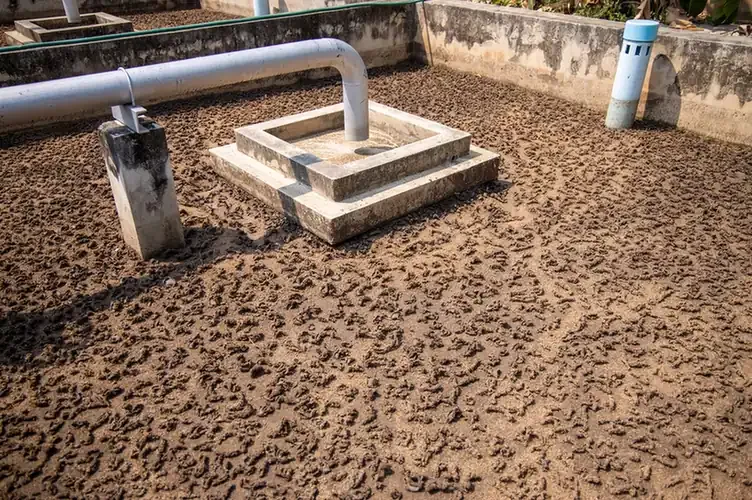
At the most difficult end of the range are cohesive deposits containing compacted solids, fibres, grit or sticky residues. These may remain attached to the tank floor while liquid is withdrawn from above.
Why a pump specification is not enough
Assessing pumpability involves the complete transfer arrangement, not just the pump itself. Relevant factors include:
- Solids concentration: The amount and distribution of dry matter within the mixture.
- Particle properties: Size, density, abrasiveness and the presence of fibres or lumps.
- Flow behaviour: Whether sludge flows continuously, separates or resists movement after standing.
- Transfer distance: Pipe length, bends and elevation influence the pressure required.
- Intake conditions: A pump cannot transfer material consistently if the sludge does not reach its inlet.
A sludge layer can also contain several different consistencies. A pumpable upper portion does not establish that the compacted material underneath can be extracted in the same way.
Why adding water can create another problem
Dilution may make some sludges easier to move, but adding liquid increases the volume requiring storage, transfer or treatment unless that water is subsequently separated.
For example, adding five cubic metres of water to five cubic metres of sludge produces approximately ten cubic metres of mixture before accounting for any other volume changes. The quantity of original dry solids remains essentially unchanged.
This distinction matters where collection capacity is limited or waste must be transported away. Easier pumping does not automatically mean less material to manage.
Dilution can also cause settling or separation during transfer. Where deposits contain substances requiring particular handling, introducing more water may complicate rather than simplify the operation.
Pumping, conditioning or dewatering?
Three different approaches address different material conditions.
Direct pumping
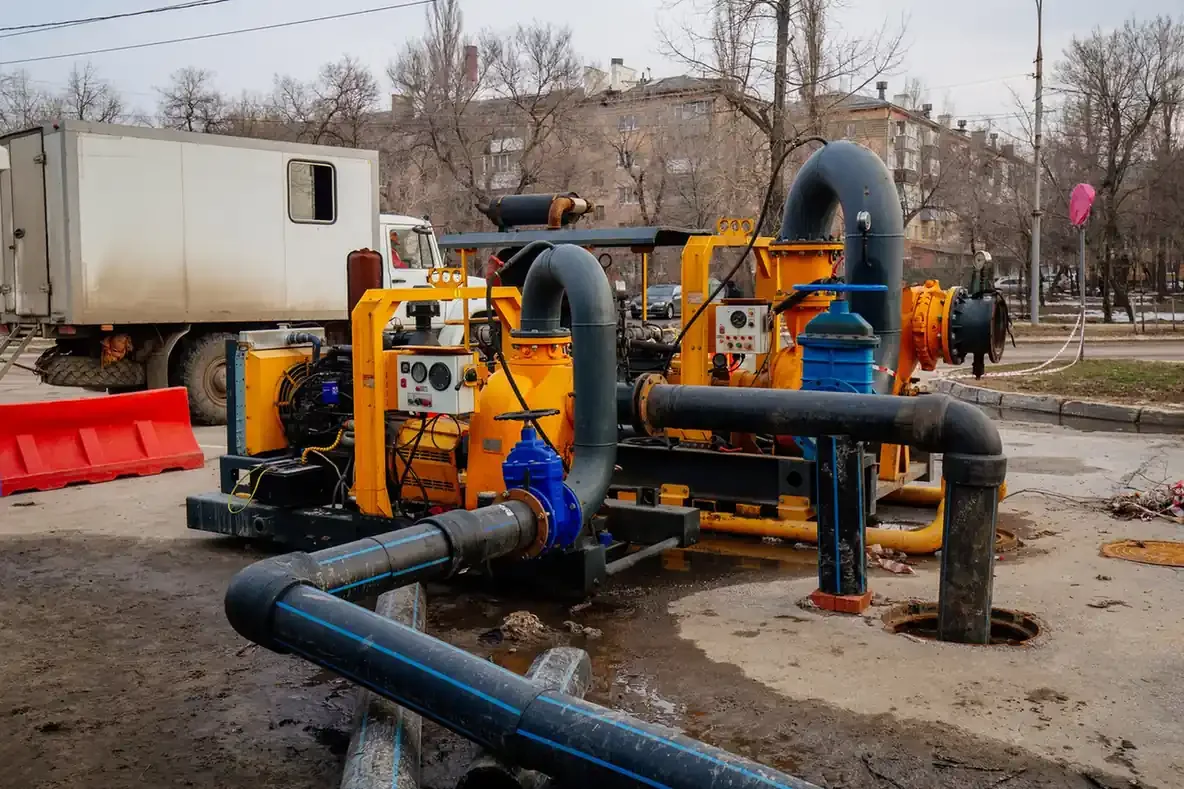
This is appropriate where the sludge can reach the intake, travel through the selected equipment and remain sufficiently consistent during transfer. It may be suitable for liquid sludge or a thick but mobile slurry.
Conditioning
Where material is difficult to move, mechanical or process-based conditioning may alter its handling characteristics. The method depends on the particular sludge and whether it is intended for transfer, further treatment or disposal.
Dewatering
When excess water is contributing significantly to the quantity requiring handling, sludge dewatering separates part of the liquid from the solids. It is not automatically a means of making already compacted deposits pumpable.
Government descriptions of sewage sludge treatment processes distinguish thickening and subsequent dewatering, illustrating that these operations serve different purposes.
Choosing the handling route
The practical starting point is to establish whether the material is freely flowing, thick but transferable, or effectively non-flowing. A representative assessment should consider settled and suspended fractions rather than relying only on what appears near the liquid surface.
Where composition or consistency is uncertain, sludge sampling can inform the handling assessment.
For sludge that can be extracted but contains substantial water, dewatering may reduce the volume of material requiring onward solids handling. Where a tank contains compacted deposits, access and extraction methods may need resolving before separation becomes relevant.