
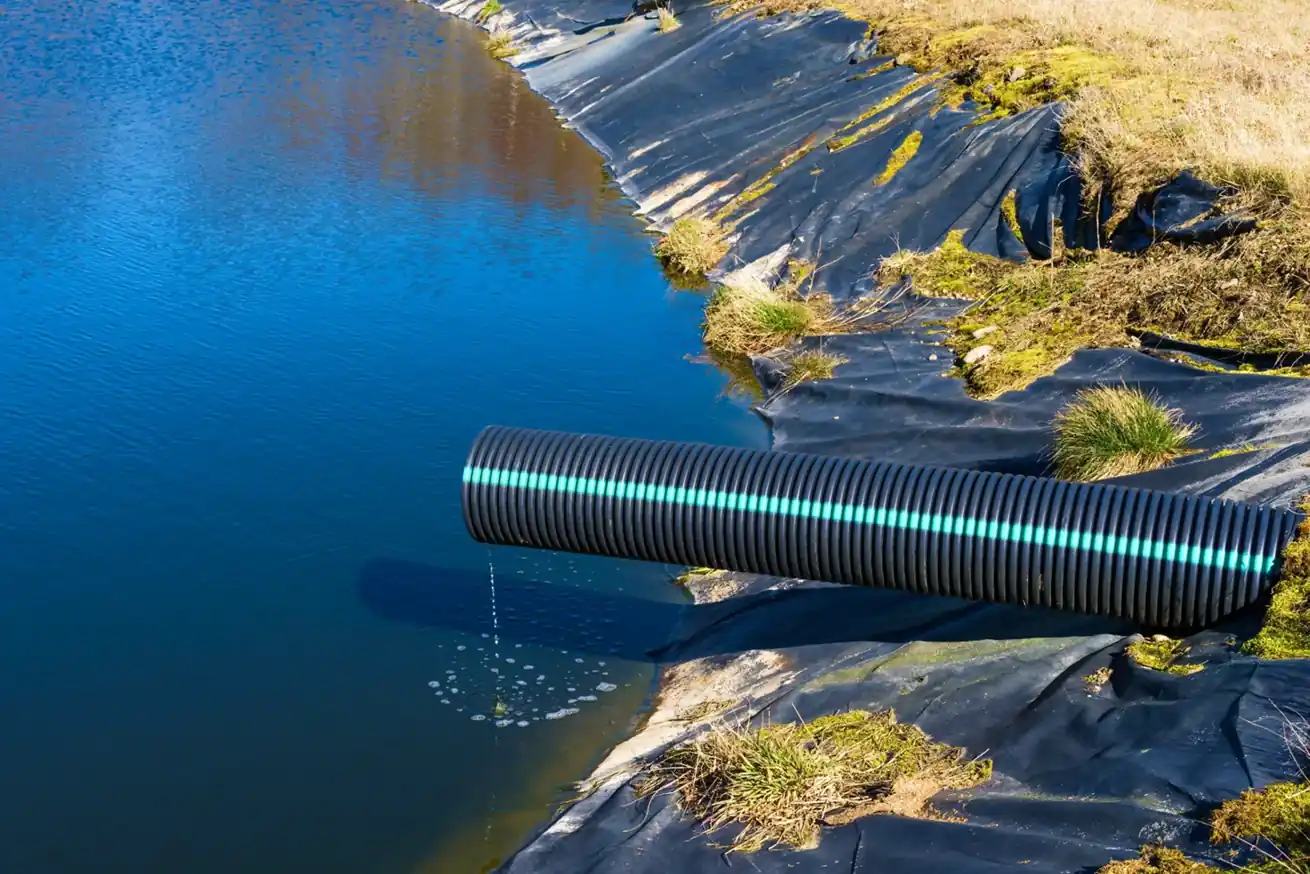
Industrial sludge removal
Pond Dredging
A pond can hold plenty of water and still be too shallow to work. Silt builds up quietly until fish, plants and outlets suffer. We can help with pond dredging and silt removal projects, from method choice through to sampling and the destination for the dredged material.
What Pond Dredging Involves
Dredging a pond means removing accumulated sediment from the bed to restore depth, volume and flow. The material is usually soft organic silt, but it can also contain grit, leaf litter, roots, clay and, in some waters, contamination from road runoff or historic land use. The depth of the silt layer, not the water depth, drives the method. A pond that looks healthy at the surface may have lost most of its usable volume below.
The depth and distribution of silt determine how much material needs removing and which equipment can reach it. Bathymetric surveys or probe readings can establish the bed profile, while machinery access and water-level control influence how dredging can be carried out. A single depth reading is rarely enough to establish the quantity of accumulated silt.
Choosing a Dredging Method
There is no single method that suits every water body. The choice depends on size, depth, access, the sensitivity of the pond and how the silt will be handled afterwards.
- Long-reach excavator: works from the bank where ground conditions allow. Suited to smaller ponds and margins, but reach limits how far into the centre it can work.
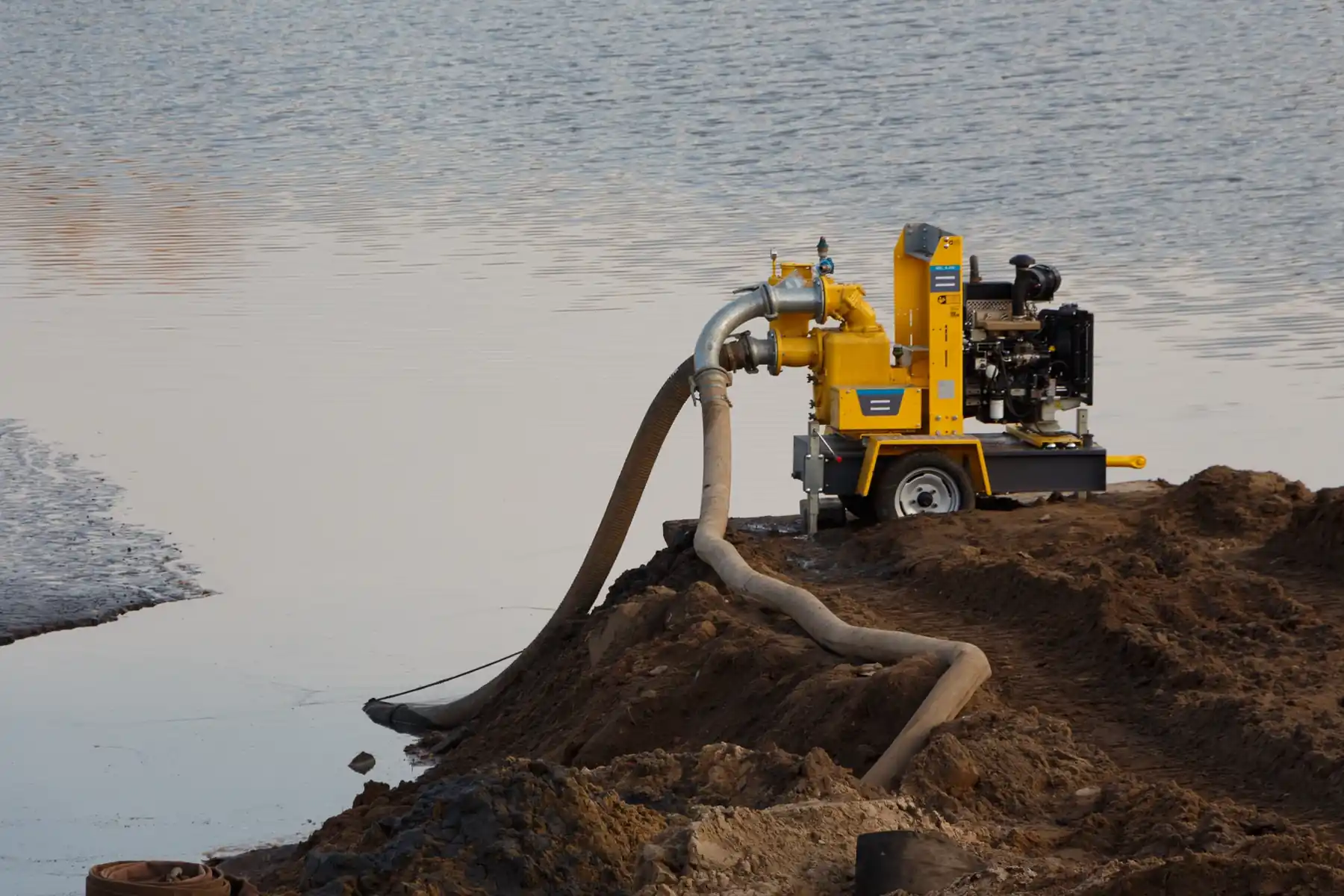
- Suction dredger: removes silt as a slurry, often with less disturbance to banks. Needs a discharge point and a plan for the water that comes with the silt.
- Silt pumping: moves dredged material to a treatment or storage area, commonly into geobags or a lagoon, where solids settle and water separates.
Excavators can remove dense deposits but their reach is limited, and soft banks may not support the machinery. Suction dredging moves silt with water, leaving a liquid mixture that may need settling or dewatering. Pumped removal needs a suitable pipe run and somewhere authorised to receive the material. The depth, consistency and location of the deposits determine which method is suitable.
Fish, Wildlife and Timing
Pond dredging can disturb nesting birds, fish, amphibians and the vegetation around the water. Seasonal restrictions and ecological requirements may limit when machinery can operate. Some ponds may need ecological surveys or protected-species measures before dredging can proceed.
Fish may need to be removed before dredging, depending on the species present and the effect the work will have on the water. Any relocation needs a suitable receiving location and the necessary authorisation. Disturbing organic silt can reduce dissolved oxygen, particularly in warm weather. Oxygen monitoring and measures to protect fish may therefore be needed during the work.
Sampling and Waste Classification
Where dredged silt is classified as waste, its composition determines how it can be recovered, treated or disposed of. For dredging spoil, the List of Waste includes 17 05 05* for material containing hazardous substances and 17 05 06 for material other than that covered by 17 05 05*. Classification depends on the source and composition of the material, not simply its appearance. Material retained or reused at the site must also meet the applicable environmental requirements.
Sampling and analysis may be needed before a destination is confirmed, depending on the source of the silt, site history and the requirements of the receiving facility. Relevant parameters can include metals, hydrocarbons, pesticides and nutrients. The sampling plan should reflect the material and the decision it needs to support. We can help arrange sampling and review the results alongside the proposed removal method and receiving facility. See sludge waste classification and sludge sampling for more detail.
Where Dredged Silt Can Go
The destination for dredged material is often the part of a project that decides whether it goes ahead. Common outlets include:
- Deposit near the dredging location where a relevant exemption or authorisation applies and all of its conditions are met. In England, the D1 exemption can apply to certain non-hazardous dredging spoil from inland waters.
- Recovery on land where the material is suitable and the relevant permit, exemption or other authorisation allows the proposed use.
- Disposal or treatment at an appropriately authorised facility where recovery is not suitable.
Dewatering can reduce the quantity of material requiring transport, but dewatering alone does not establish a different waste classification. The classification and receiving facility still need to reflect the material after treatment. Waste documentation supports traceability; it does not by itself prove legal compliance. We can help with planning the silt destination alongside the dredging method, because the two decisions are linked. Related pages include sludge dewatering and sludge disposal.
Ponds, Lakes, Canals and SuDS
Different water bodies bring different priorities. Estate lakes and fishing lakes usually focus on depth, water quality and fish health. Golf course ponds often need to look right as well as function. SuDS and balancing ponds must retain their storage volume and outlet performance, so silt removal is tied to flood risk as much as amenity.
Mill ponds and canals often contain retaining walls, sluices and other structures close to accumulated silt. Dredging near these features may require restricted excavation depths or smaller equipment to avoid undermining them. Listed structures and historic waterways can also be subject to additional controls. Blocked outlets and damaged control structures may need attention if they contribute to repeated silt build-up. Related methods are covered under silt removal.
Small Garden Ponds
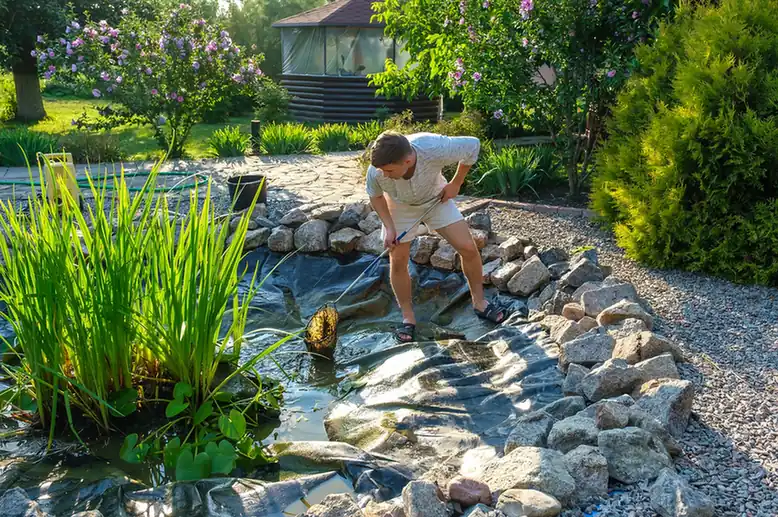
Domestic garden ponds are a different scale of work. Where a pond is small and the silt is limited, manual removal or a pond vacuum may be enough, and specialist contractors are rarely economic. If a garden pond has a liner, a large silt load or protected wildlife, it is worth taking advice before disturbing it.
Pond Depth, Access and Silt Removal
Most problems on dredging projects trace back to decisions made too late. Useful questions include:
- How thick is the silt, and how is that known?
- What is the target depth or volume after dredging?
- Where will the silt go, and has the receiving site confirmed it will accept it?
- What sampling is needed, and when will results be available?
- Are there fish, protected species or nesting constraints?
- How will water levels be managed during the work?
- What access is available for plant and transport?
Answering these early reduces the risk of a stalled project. We can help with pond dredging and silt removal where the method, the sampling and the silt destination are considered together.
Free online tool
Sludge EWC Code Checker
Look up sludge sources, possible contaminants and waste-code candidates.
Common questions
Frequently asked questions
How do I know how much silt is in my pond?
A bathymetric survey or a series of depth probes across the pond gives a much better picture than a single reading. The silt thickness varies across a pond, and the method and cost depend on the volume and distribution, not just the maximum depth.
Can dredged silt be spread on land?
Sometimes. Recovery on land may be possible where the dredging spoil is suitable and the relevant permit, exemption or other authorisation allows the proposed use. The waste code alone does not make landspreading permissible. Site conditions, analysis where required and the rules for the relevant UK nation must all be checked.
Does dewatering make dredged silt non-hazardous?
No. Dewatering reduces water content and can reduce the quantity requiring transport, but dewatering alone does not establish a different waste classification. The material still needs to be assessed and managed under the appropriate classification and sent to a facility that accepts it.
When is the best time to dredge a pond?
It depends on the wildlife present. Nesting birds, spawning fish and amphibian activity all constrain the window. In many ponds the work has to fit around these periods, and a fish rescue may be needed before silt is disturbed.
Do I need permission to dredge a pond?
It depends on the water body and the location. Ponds connected to a watercourse, canals, and some SuDS features may need agreement from the relevant authority. Requirements differ across England, Wales, Scotland and Northern Ireland, so they should be confirmed before work is specified.
Request a quote
Complete the form and we will get back to you.