
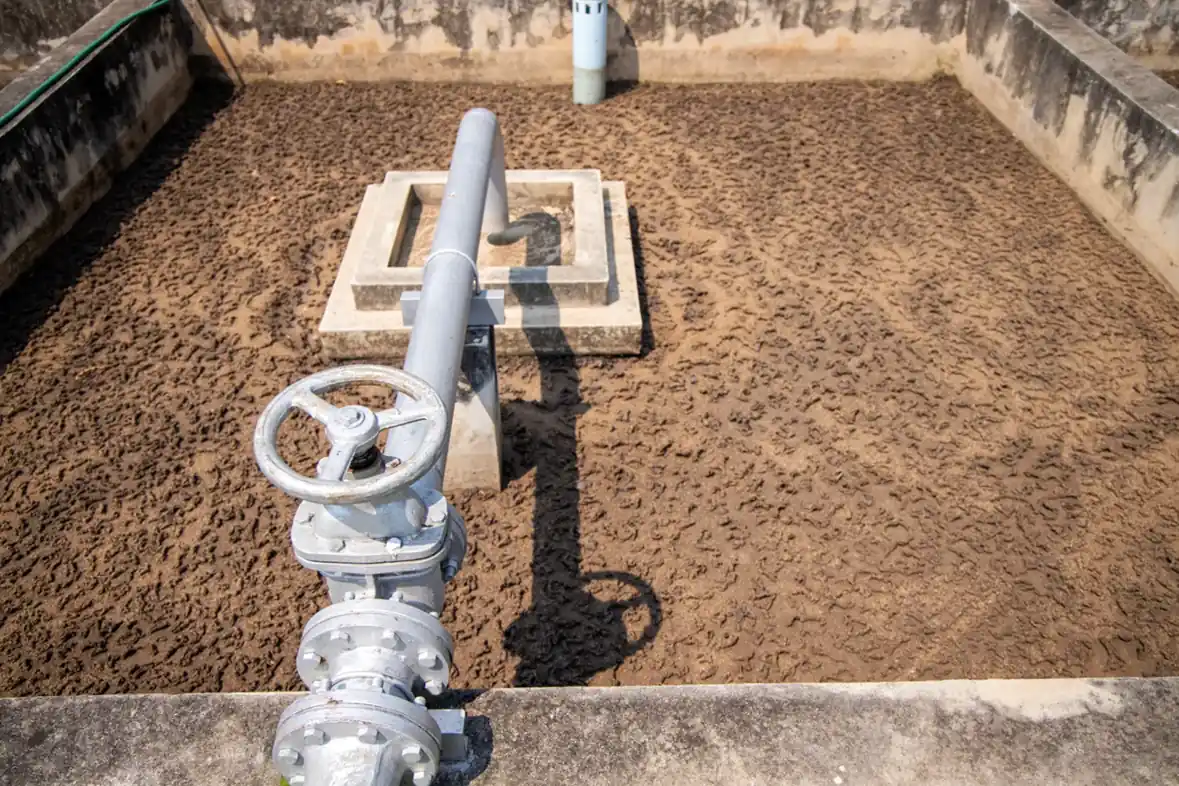
Industrial sludge removal
Sludge Sampling
Sludge is rarely uniform. A sample taken from the wrong depth or the wrong point can mislead a laboratory, a disposal route and a waste classification. Where access, confined spaces or other site hazards are involved, sampling needs competent planning and execution, and the plan matters as much as the analysis.
Why Sludge Sampling Matters
A single sample from a sludge tank or lagoon can be misleading. Sludge settles into layers, and the material near the surface is often quite different from what sits at the base. If a sample is taken from one point without thinking about the whole body of material, the laboratory result may describe that point rather than the sludge you actually need to move or dispose of.
Sampling supports several decisions. It informs waste classification, helps identify contaminants, and gives treatment or disposal options a factual basis. It does not, on its own, prove that waste is non-hazardous, and a laboratory result only reflects the sample it received. The value of the exercise depends on whether the sample represents the material.
We can help with sludge sampling as part of a wider removal, disposal or classification project, working alongside competent specialists where the material or the access requires it.

How Settled Layers Affect a Sample
Most sludges are heterogeneous. In a settlement tank, you might find a floating crust, a clearer supernatant layer, a mixed suspension and a denser settled layer at the bottom. A lagoon may have similar stratification plus accumulated grit, vegetation or debris. Each layer can differ in solids content, moisture, organic load and contaminant concentration.
That variation matters because disposal routes and treatment methods respond to different properties. A high-solids basal sludge may suit dewatering before transport, while a thin suspension may be better handled by tanker. If the sample only captures the supernatant, the receiving facility may be working from the wrong picture.
Depth and position are not the only variables. Seasonal changes, recent process upsets, and the history of what has entered the tank or lagoon all influence composition. A sampling plan should account for these where they are known.
Planning a Representative Sample
Representative sampling starts with a question: what decision will this result support? A sample for waste classification has different requirements from one used to check digester performance or to size a dewatering trial. The plan should reflect the purpose.
In practice, a sampling plan usually considers:
- The number and location of sampling points across the tank, lagoon or vessel
- Depth intervals, so that settled and suspended layers are captured separately or in proportion
- Whether a composite sample is appropriate, or whether individual samples are needed
- How the material will be mixed, if at all, before sampling
- Sample volume, container type and preservation requirements set by the laboratory
- Chain of custody and labelling, so results can be traced to a specific point and time
Composite sampling can be useful where the material is broadly similar and an average is meaningful. Where layers differ sharply, separate samples often give a clearer picture. The choice depends on the material and the decision at hand.
Sampling from Tanks, Lagoons and Digesters
Access shapes the method. A tank with a suitable sampling hatch or valve may allow samples to be taken without entry. Lagoons and digesters can require specialist access arrangements and additional controls because of water, gas, pressure or confined-space hazards. The method should be selected around the actual site conditions rather than a standard equipment list.
Safety-critical sampling should not be improvised. Where work falls within the Confined Spaces Regulations 1997, entry should be avoided where possible and a safe system of work is required where entry is unavoidable. The controls and emergency arrangements must reflect the specific hazards and sampling method.
For accessible tanks, sampling may be possible from suitable hatches, valves or other safe points. Where sludge has a crust, heavy debris or distinct layers, the method should preserve the information needed from those layers rather than creating an unrepresentative blend.
What Laboratories Test For
Laboratory testing is chosen to match the decision. Common parameters include:
- Dry solids and moisture content, which affect volume, weight and dewatering options
- Loss on ignition or organic content, relevant to biological treatment and some disposal routes
- pH and alkalinity, which influence treatment and handling
- Heavy metals such as lead, cadmium, chromium, copper, nickel and zinc
- Hydrocarbons, oils and greases, particularly for industrial or interceptor sludges
- Nutrients including nitrogen and phosphorus, relevant to land application or wastewater treatment
- Specific contaminants where the source process is known, such as solvents or chlorinated compounds
Not every project needs every test. Over-testing adds cost without adding clarity, while under-testing can leave a classification or disposal route uncertain. The list should follow from the process knowledge and the questions being asked.
Sampling and Waste Classification
Waste classification under the Environment Agency’s waste classification technical guidance depends on the composition of the waste and the substances it contains. A sample result is one input. It does not replace the assessment of the process that produced the sludge, and a hazardous or non-hazardous conclusion cannot be drawn from a name or a single figure alone.
Where a sludge is suspected of containing hazardous substances, the classification should consider the source materials, the process, and the analytical results together. The hazardous waste guidance sets out the duty of care and the extra requirements that apply to producers, carriers and consignees in England, with separate rules in Scotland, Wales and Northern Ireland.
Sampling also supports the documentation that accompanies a waste movement. Duty of care paperwork supports traceability; it does not by itself prove legal compliance. Accurate sampling and clear records help keep the description of the waste consistent with what is actually being moved.
Common Problems and Practical Limits
Some recurring issues are worth knowing about. A sample taken only from the top of a tank may show low solids while the base is dense and difficult to pump. A sample taken after mixing may not reflect the material as it will be removed. A sample stored too long before analysis may change, particularly where biological activity continues.
There are also limits to what sampling can show. A small sample cannot capture every pocket of contamination in a large lagoon. Results are only as good as the plan behind them, and the laboratory can only report on what it receives. Where the material is very variable, more samples or a staged approach may be needed.
We can help with sludge sampling as part of sludge disposal, sludge waste classification or desludging projects, and with related work such as lagoon desludging and tank sludge removal. The sampling plan should be agreed before work starts, so the results answer the questions that matter.
Free online tool
Sludge EWC Code Checker
Look up sludge sources, possible contaminants and waste-code candidates.
Common questions
Frequently asked questions
Can I take a sludge sample myself?
Simple sampling from a safe, accessible point may be possible. Tanks, lagoons and digesters can introduce access, gas, water or confined-space hazards, so the need for specialist controls depends on the actual site and method. Where the Confined Spaces Regulations 1997 apply, entry should be avoided where possible and a safe system of work and suitable emergency arrangements are required. The sampling method also affects whether the result is representative.
How many samples does a sludge tank need?
There is no fixed number. It depends on the size of the tank, how variable the material is, whether layers differ, and what decision the results will support. A small, well-mixed tank may need fewer samples than a large lagoon with a history of variable inputs. The plan should be agreed before sampling starts.
Does a laboratory result prove my sludge is non-hazardous?
No. A laboratory result describes the sample it received. Waste classification considers the composition of the waste, the process that produced it and the substances it contains. A non-hazardous conclusion cannot be drawn from a name or a single figure alone, and a sample that is not representative can mislead.
What is the difference between a composite and a discrete sample?
A composite sample combines material from several points or depths into one sample, which can suit broadly similar material where an average is meaningful. A discrete sample is kept separate, which is often more useful where layers differ sharply or where you need to know how composition changes with depth.
Request a quote
Complete the form and we will get back to you.