
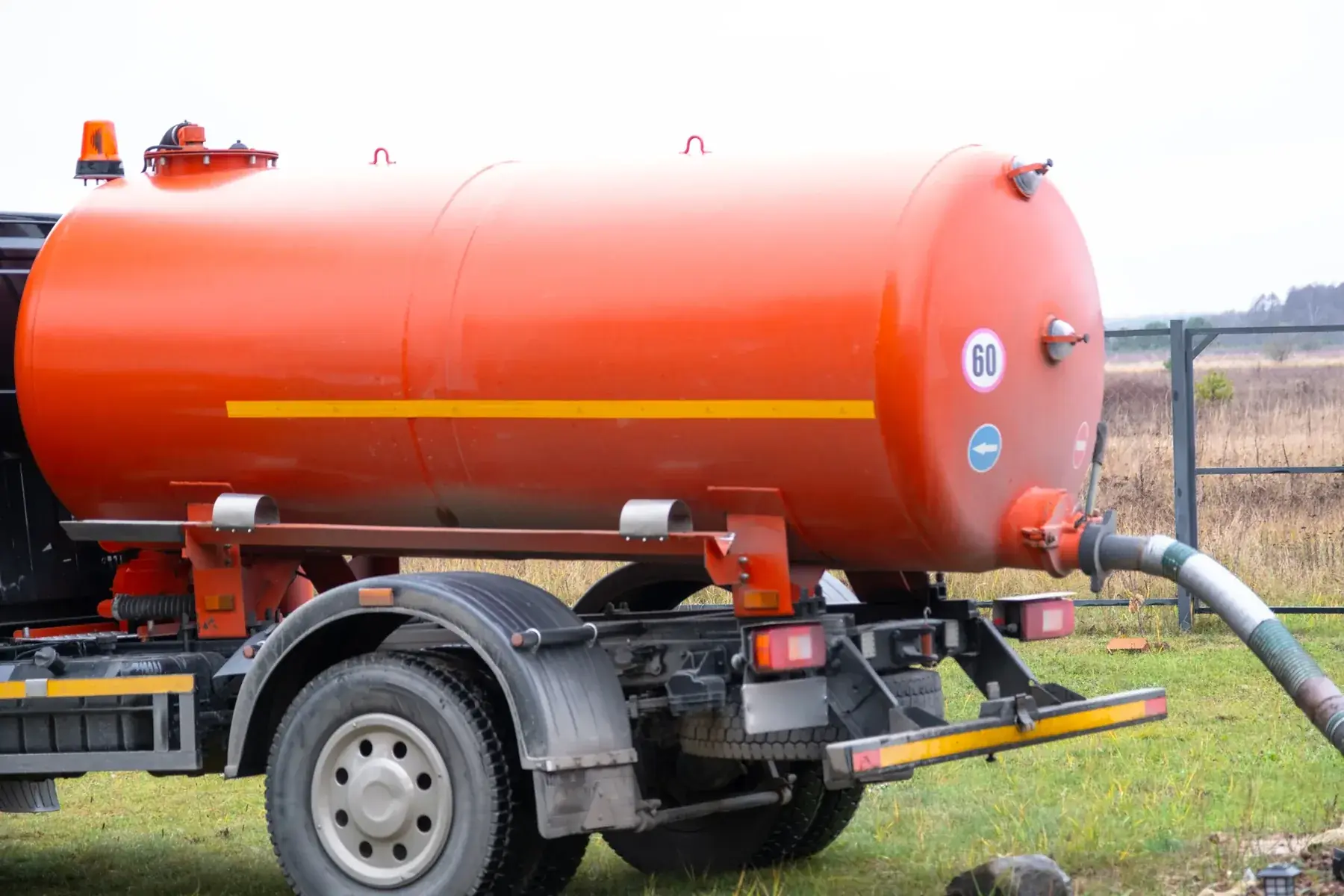
Industrial sludge removal
Lagoon Desludging
A lagoon can hold far less usable volume than its outline suggests once sludge and silt settle. Desludging restores capacity, but the method depends on depth, access, liner type and what the solids contain. We can help with lagoon desludging projects from survey through to removal.
What Lagoon Desludging Involves
Lagoons are used to store or settle liquids across many industries: sewage treatment works, food factories, quarries, construction sites and anaerobic digestion plants. Over time, solids settle and compact on the base. A settlement lagoon that once held two metres of depth may be down to half a metre of clear water above a thick sludge layer. The lagoon still looks full, but its working volume has gone.
Desludging is the removal of that accumulated material to restore capacity and, in some cases, to reduce odour, prevent carry-over into downstream processes or allow inspection of the base and liner. The work is rarely a single operation. It usually involves a survey, a method decision, removal, and handling of the material once it is out.
We can help with lagoon desludging projects where the objective is to restore volume, remove silt or clean out a lagoon before repair or decommissioning.
Survey and Volume Assessment
Before any removal method is chosen, the sludge depth and distribution need to be understood. A lagoon is not uniform. Solids tend to be deepest near the inlet, in the centre, or against a wall where flow is slowest. Assuming an even layer across the whole base can overstate or understate the volume significantly.
Two approaches are common:
- Sonar or bathymetric survey from a boat or pontoon, which maps the sludge surface across the lagoon and gives a volume estimate.
- Core sampling or probing at set points, which shows layer thickness and lets the material be described and sampled.
Both have limits. Sonar reflects off the sludge surface and cannot see how dense or how deep the layer is. Cores give accurate local depth but only at the points taken. A combination is often the most useful. Where the sludge is thick and consolidated, a core may refuse to penetrate, which itself tells you something about the material.
Sampling for waste classification should happen before removal, not after. The classification determines how the material can be transported and where it can go. See sludge waste classification for how that assessment is approached.
Removal Methods
The method depends on depth, access, liner type, the nature of the sludge and whether the lagoon can be taken out of service.
Amphibious and pontoon dredgers
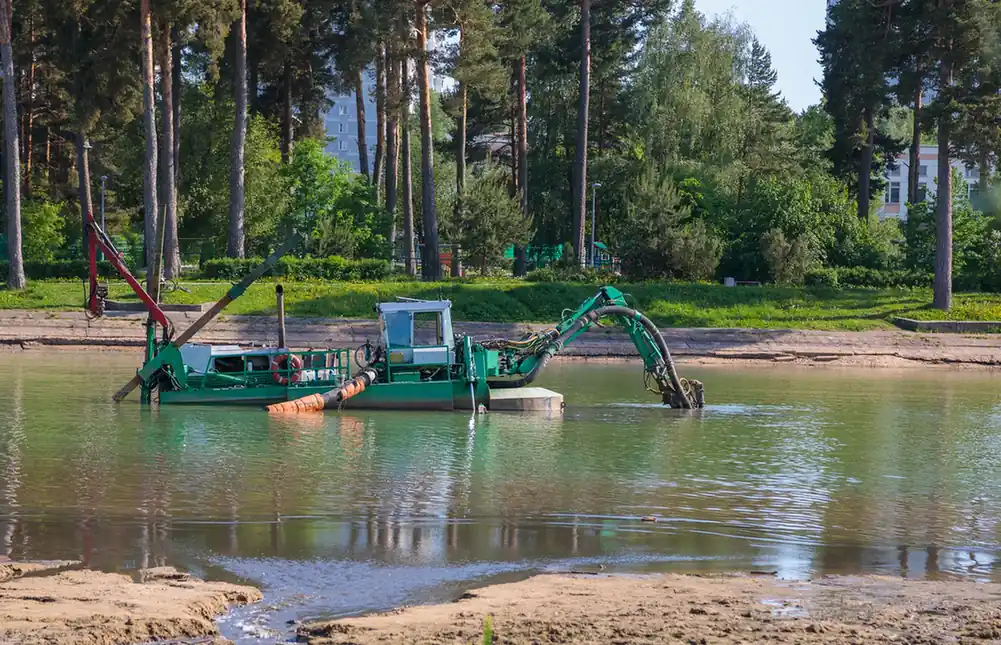
An amphibious dredger or a pontoon-mounted unit can work from the water surface without draining the lagoon. This suits large lagoons that must stay in service or where draining would be impractical. The dredger loosens and lifts sludge, often pumping it to a handling area on the bank.
Submersible pumps
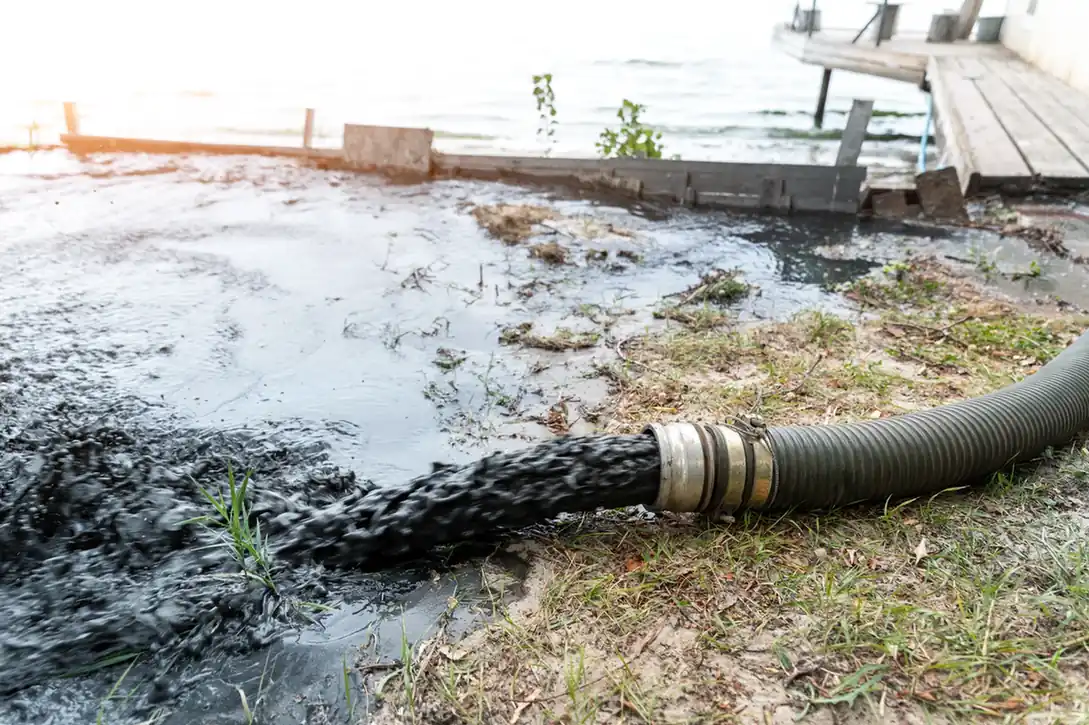
Where sludge is soft enough to flow, submersible pumps can move it as a slurry. This works well for thin, recently settled material but struggles with compacted or fibrous sludge. Pump selection matters: a pump sized for water will block or wear quickly on gritty or rag-heavy material.
Long-reach excavators
Where the lagoon can be drained or partly drained and the base can support plant, a long-reach excavator can lift sludge directly. This gives good control over the cut but requires a stable base and safe access. It is not suitable where the liner could be damaged or where the ground is too soft.
Mobile dewatering beside the lagoon
Pumped sludge can contain a high proportion of water. Mobile dewatering beside the lagoon can reduce the volume that needs to leave site where the material and project justify it. The separated liquid needs an appropriate route based on its quality and the site’s permissions.
Liner Protection
Many lagoons are lined with HDPE, clay or concrete. Dredging and excavation near a liner carry real risk. A grab or bucket that contacts the liner can puncture or tear it, and the cost of repair or replacement can exceed the desludging itself.
Protective measures include leaving a residual layer of sludge over the liner rather than cutting to bare membrane, using dredge heads designed to limit ground contact, and marking or surveying the liner position before work starts. Where the liner condition is unknown, a survey before desludging is sensible.
Lagoon Types and What Changes
The same word covers quite different situations.
- Sewage treatment works lagoons hold settled sewage sludge, often with a history of biological treatment. Odour and gas are considerations.
- Industrial effluent lagoons may hold material with metals, oils or process chemicals, which affects classification and disposal route.
- Quarry and construction settlement lagoons often hold mineral silt and fines. The material can be abrasive and fast-settling, but it should not be assumed to be inert without the appropriate assessment.
- Digestate lagoons hold material from anaerobic digestion. The route for removed material depends on its status, composition and the controls that apply to its intended use or disposal.
- Food factory lagoons can hold high organic loads with fats and solids that behave differently from mineral silt.
Livestock slurry is a separate case and is covered under slurry removal.
Working Out the Volume
Survey data can be used to estimate the in-situ sludge volume, but transport and disposal planning also depend on properties such as water content and bulk density. A single depth reading is not a reliable volume estimate because sludge distribution can vary across the lagoon.
Safety and Competence
Lagoon work can involve deep water, unstable ground, gases and heavy plant. Tanks, pits or other enclosed areas associated with the work may also meet the definition of a confined space, in which case the Confined Spaces Regulations 1997 apply. The site-specific risks need to be assessed before work starts.
The controls depend on the lagoon and the proposed method. Where relevant, that can include safe access, exclusion zones, atmospheric monitoring and emergency arrangements.
Documentation and Disposal
Where the removed sludge is waste, the duty of care applies. Under the waste duty of care code of practice, anyone who produces, carries, keeps, treats or disposes of controlled waste must ensure it is managed properly and transferred only to authorised persons. Waste transfer information and, for hazardous waste, the relevant consignment documentation support traceability. They do not by themselves prove that the material has been classified correctly or that the route is lawful.
Classification follows Environment Agency waste classification technical guidance. A lagoon sludge cannot be assumed hazardous or non-hazardous from its name. The assessment depends on the source, the process and the concentrations present. Where the material is hazardous, additional requirements apply, as set out in the hazardous waste guidance.
Dewatering reduces volume but should not be treated as automatically changing a hazardous waste into non-hazardous waste. The dewatered material still needs to be classified from its actual composition.
Planning the Work
Useful questions before a lagoon desludging project goes ahead:
- What is the objective: restore volume, remove silt, prepare for repair, or clean before decommissioning?
- Can the lagoon be taken out of service, and for how long?
- What is the liner type and condition?
- Has the sludge been sampled and classified?
- Where will dewatered material go, and can liquid return to the works?
- What access is there for plant, pumps and transport?
We can help with lagoon desludging where these questions are answered early. Related work includes sludge dewatering, pond dredging and silt removal.
Free online tool
Sludge EWC Code Checker
Look up sludge sources, possible contaminants and waste-code candidates.
Common questions
Frequently asked questions
How is the volume of sludge in a lagoon worked out?
A bathymetric or sonar survey maps the sludge surface across the lagoon, and core sampling or probing at set points shows layer thickness. Combining the two gives a more reliable volume than either alone. A single probe in the deepest part is not a volume estimate.
Does a lagoon need to be drained before desludging?
Not always. Amphibious and pontoon dredgers and submersible pumps can work with the lagoon in service. Draining may be needed where a long-reach excavator is used or where the base and liner need inspection. The choice depends on depth, access, liner type and whether the lagoon can be taken out of service.
Can dredging damage a lagoon liner?
It can if a grab or bucket contacts the liner. Protective measures include leaving a residual layer of sludge over the membrane, using dredge heads that limit ground contact, and surveying the liner position before work starts. Where liner condition is unknown, a survey before desludging is sensible.
Is lagoon sludge always hazardous waste?
No. Classification depends on the source, process and composition of the material, not on its name. Sampling and assessment may be needed before a disposal route is chosen. Dewatering reduces volume but should not be treated as automatically making hazardous waste non-hazardous.
What documentation is needed when lagoon sludge is removed?
Where the removed material is waste, the duty of care applies. Waste transfer information, and the relevant consignment documentation for hazardous waste, support traceability. They do not by themselves prove that the material has been classified correctly or that the route is lawful.
Request a quote
Complete the form and we will get back to you.