
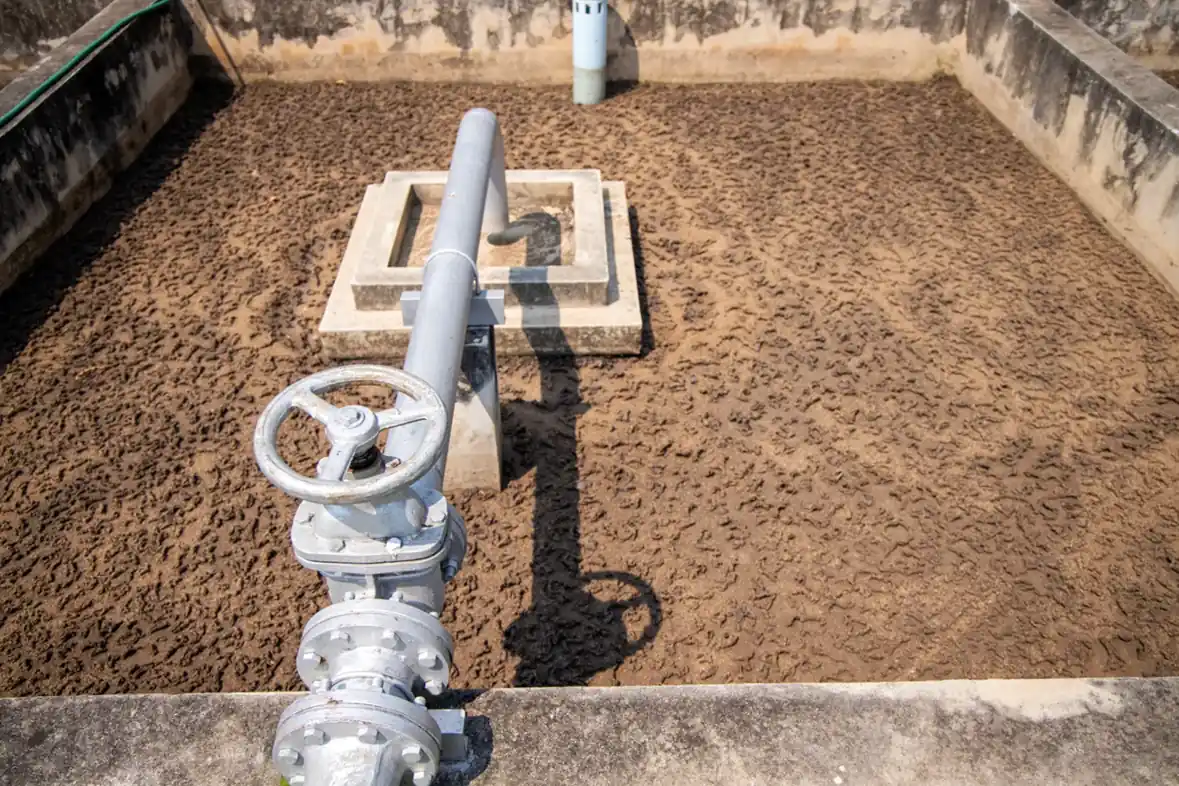
Industrial sludge removal
Sludge Volume Index
Sludge volume index turns a 30-minute settleability test into a single number that describes how compactly activated sludge settles. It helps operators judge whether sludge is likely to separate well in a final clarifier or bulk and carry over solids.
What Sludge Volume Index Measures
Sludge volume index, usually shortened to SVI, describes the volume occupied by one gram of mixed liquor suspended solids after settling for 30 minutes. It is a settleability measure rather than a measure of sludge quantity. A low SVI suggests sludge that compacts well. A high SVI suggests poor compaction and a greater risk of solids carryover from the final clarifier.
SVI is used at activated sludge works to track how the biomass behaves over time. It does not tell you the sludge’s dry solids content, its calorific value or whether it is hazardous. Those questions need separate sampling and analysis. SVI is one indicator among several, and a single result should be read alongside MLSS, dissolved oxygen, sludge age and microscopic examination where available.

Sludge Volume Index Formula
The standard calculation uses two measurements from the same mixed liquor sample:
- Settled volume after 30 minutes, in millilitres per litre (mL/L)
- Mixed liquor suspended solids, in grams per litre (g/L)
The formula is:
SVI (mL/g) = settled volume (mL/L) ÷ MLSS (g/L)
If settled volume is recorded in mL/L and MLSS in mg/L, divide MLSS by 1,000 first, or multiply the result by 1,000 at the end. Consistency matters more than the route taken.
Worked example
A mixed liquor sample settles to 240 mL/L after 30 minutes. The MLSS for the same sample is 3.2 g/L.
SVI = 240 ÷ 3.2 = 75 mL/g
That result sits in the well-settling range for many municipal activated sludge plants. If the same settled volume occurred at an MLSS of 1.6 g/L, the SVI would be 150 mL/g, which would point to poorer settleability. The settled volume alone is not enough to judge the sludge.
Interpreting SVI Results
Interpretation bands are a guide, not a fixed rule. Common working bands for municipal activated sludge are roughly:
| SVI (mL/g) | General indication |
|---|---|
| Under 80 | Dense, well-settling sludge; possible risk of over-compaction in some plants |
| 80 to 150 | Typical settling range for many municipal works |
| 150 to 250 | Poor settling; bulking may be developing |
| Over 250 | Severe bulking; clarifier solids carryover likely |
These bands shift with plant type, loading, temperature and industrial input. Extended aeration plants, oxidation ditches and membrane bioreactors behave differently from conventional plug-flow systems. A rising trend at one works is often more informative than a single reading compared against a textbook figure.
Causes of High SVI and Bulking
Bulking is the term used when sludge settles slowly and compacts poorly. Several causes can produce a high SVI, and more than one may be present:
- Filamentous bacteria growing faster than floc-forming organisms, often linked to low dissolved oxygen, low food-to-mass ratio, nutrient imbalance or septic sewage
- Sludge age that is too long or too short for the plant’s design
- Temperature changes, particularly seasonal shifts that alter microbial selection
- Industrial discharges that add surfactants, solvents, oils or high organic loads
- Nutrient deficiency, especially nitrogen or phosphorus limitation in industrial-dominated flows
- Hydraulic surges that wash solids over the clarifier weir
Microscopy can help distinguish filamentous bulking from other causes such as pin floc or dispersed growth. Without that, SVI alone cannot identify the cause.
Sampling and Test Conditions
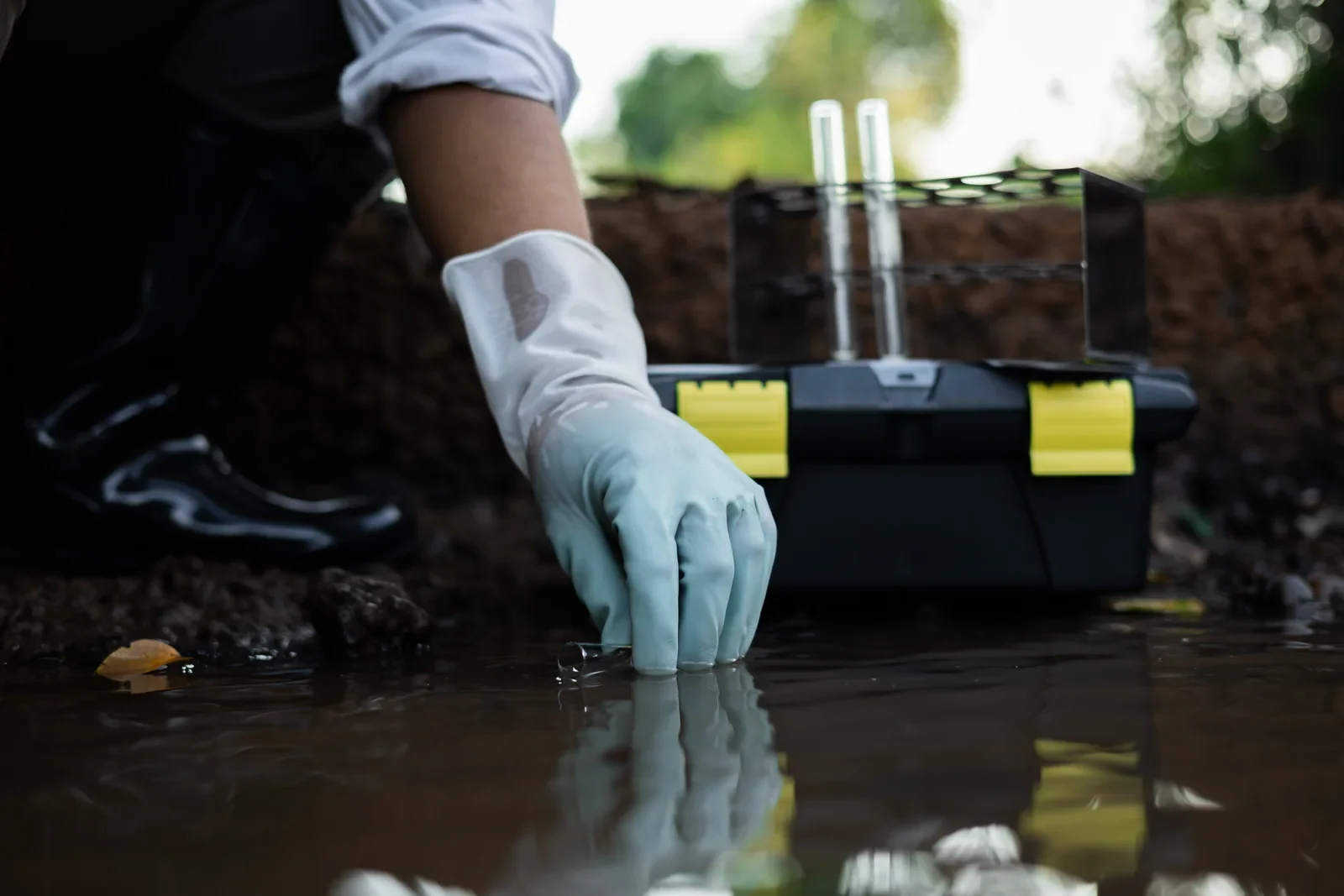
SVI depends on how the settleability test is run. The 30-minute settled volume should come from a well-mixed sample taken at a representative point, usually the aeration tank outlet or mixed liquor channel. The cylinder should be the same type each time, and the MLSS should be measured on the same sample, not taken from a different time or location.
Temperature affects settling. A sample that cools during transport can settle differently from one tested on site. Where possible, run the test at or near the works temperature and record it. For more on sampling method and what a sample can and cannot show, see sludge sampling.
What SVI Means for Sludge Handling
A high SVI can increase the load on clarification and thickening because the sludge settles and compacts poorly. It does not, by itself, tell you how well the sludge will dewater or how much water a removed sludge will contain. Those questions need separate operating data or testing.
Where sludge is removed from site, SVI can help explain poor settling upstream, but removal volumes depend on the actual solids concentration and the way the sludge has been thickened or dewatered. SVI does not change the waste classification, which depends on the source, composition and the relevant technical guidance. For the classification framework, see sludge waste classification.
We can help with wastewater sludge removal and tank sludge removal where settled solids need to be taken out of tanks, lagoons or clarifiers. The removal method depends on access, the settled layer, the liquid above it and what happens to the site’s flow while work is carried out. See wastewater sludge removal and tank sludge removal for the practical side.
Limits of SVI as an Indicator
SVI is a useful, cheap and repeatable test, but it has limits. It does not measure sludge density, rheology or dewaterability directly. Two sludges with the same SVI can behave differently in a centrifuge or belt press. It does not identify the organisms present or confirm a cause of bulking. It does not replace a full settleability assessment or a microscopic examination.
Results also depend on the MLSS measurement. If the MLSS sample is not representative, the SVI will be wrong even if the settled volume is correct. Where SVI is used to make operational decisions, it should be part of a set of measurements rather than the sole basis.
Related Guidance
For the wider picture on sludge types and how they behave, see types of sludge. For the removal and disposal side, see sludge disposal and sludge dewatering. Duty of care documentation supports traceability of waste movements; it does not by itself prove legal compliance. The Environment Agency’s waste duty of care code of practice sets out the framework in England and Wales.
Free online tool
Sludge EWC Code Checker
Look up sludge sources, possible contaminants and waste-code candidates.
Common questions
Frequently asked questions
What is a normal sludge volume index?
There is no single normal figure. For many municipal activated sludge plants, an SVI between about 80 and 150 mL/g is typical. Values under 80 suggest dense, well-settling sludge. Values above 150 suggest poorer settling, and above 250 suggests severe bulking. The useful figure depends on plant type, loading and temperature, so a rising trend at one works often matters more than a textbook band.
How do you calculate SVI?
Divide the 30-minute settled volume in mL/L by the MLSS in g/L. For example, a settled volume of 240 mL/L and an MLSS of 3.2 g/L gives an SVI of 75 mL/g. If MLSS is recorded in mg/L, divide by 1,000 before using it in the formula.
What causes a high sludge volume index?
High SVI is often linked to filamentous bacteria, which can grow when dissolved oxygen is low, the food-to-mass ratio is unsuitable, nutrients are imbalanced or sewage has turned septic. Sludge age, temperature changes and industrial discharges can also contribute. Microscopy can help distinguish filamentous bulking from pin floc or dispersed growth.
Does SVI tell you whether sludge is hazardous?
No. SVI is a settleability measure and says nothing about hazardous properties. Waste classification depends on the source, contaminants and the relevant technical guidance, such as the Environment Agency's waste classification technical guidance. A separate assessment is needed for that question.
Request a quote
Complete the form and we will get back to you.