
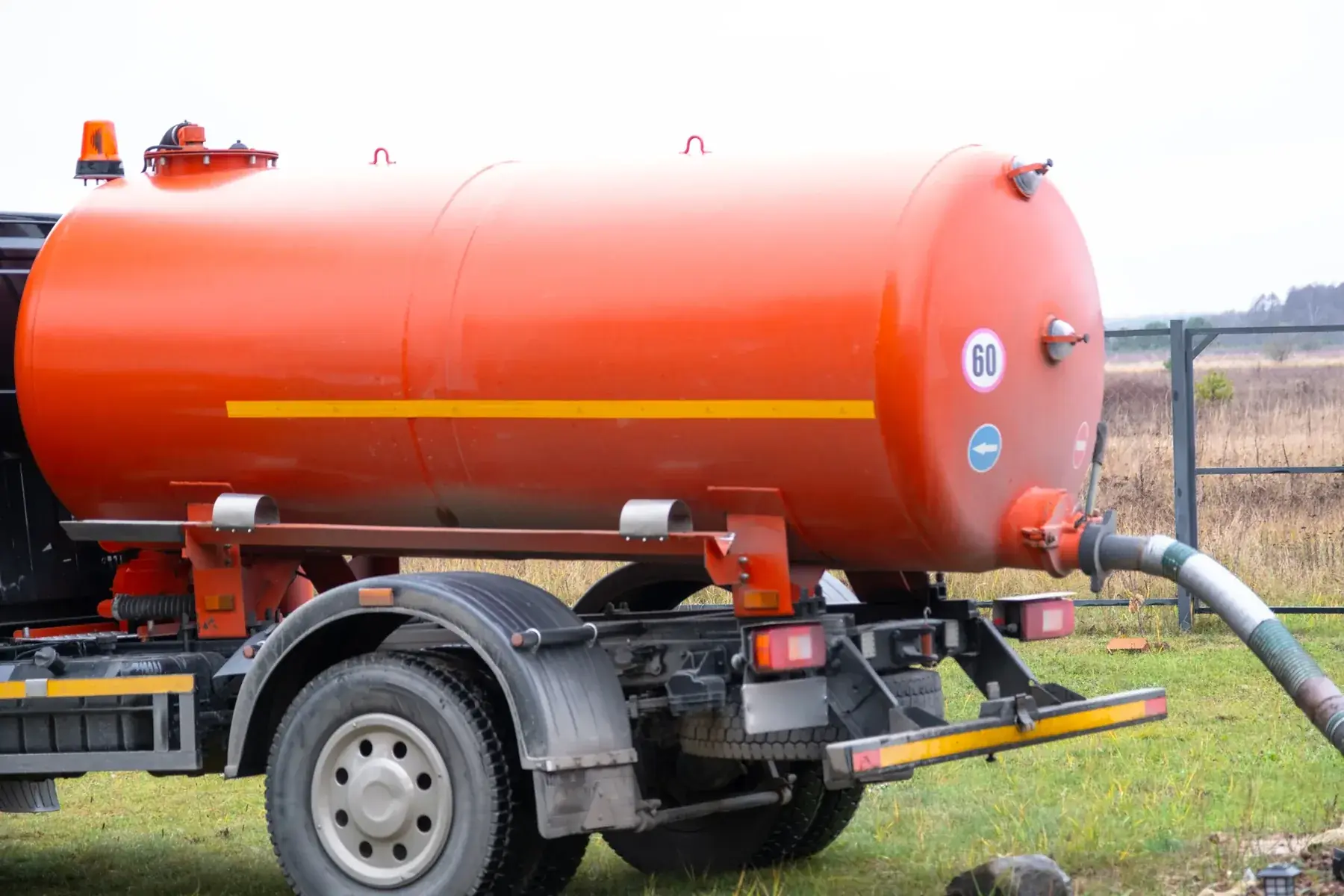
Industrial sludge removal
Anaerobic Digester Cleaning
We can help arrange anaerobic digester cleaning and desludging where grit, scale, crust or settled material is reducing usable capacity. The method depends on the material present, site access, gas risks and the plant's shutdown and restart requirements.
Why digester volume disappears
Grit, settled solids, mineral scale and floating crust can reduce usable digester volume and interfere with mixing, recirculation or other plant equipment. The extent and location of the build-up need to be understood before a cleaning method is agreed.
Useful information includes operating history, previous cleaning records, known feedstock issues, access points and any recent inspection or profiling data. We can help arrange cleaning and desludging around the condition of the digester and the material that needs to be removed.
Planning the clean before anyone opens a hatch
Digester cleaning is a safety-critical job. The gas space can hold methane and hydrogen sulphide, and the liquid can release more as it is disturbed. Competent specialist contractors should plan and carry out the work under the Confined Spaces Regulations 1997, which require entry to be avoided where the work can be done from outside, and a safe system of work plus emergency arrangements where entry cannot be avoided.
Planning should cover the proposed draw-down, isolation and gas-control arrangements, whether the work can be completed without entry, where removed material will go and how the digester will be returned to service. Any confined-space work must follow the site-specific risk assessment, safe system of work and emergency arrangements.
The removal method depends on the deposit and the tank. Pumpable material may be removable from outside the vessel, while harder or compacted deposits can require different mechanical methods. The appointed contractor should confirm the method after reviewing the site and condition of the digester.
Grit, struvite and crust: different problems, different methods
Grit is dense and abrasive. It settles where flow is slow, which is often the base and the corners. Removing it usually means high-suction vacuum equipment, and in some tanks a hydraulic or mechanical assist to move compacted material towards the suction point. Grit that reaches pumps and mixers causes wear long before it causes a blockage.
Struvite is a chemical deposit rather than a sludge. It bonds to metal and concrete and does not respond well to suction alone. Removal is often mechanical, followed by inspection of the surfaces it was hiding. Where struvite keeps returning, the cause is usually in the process rather than the cleaning, and that is worth reviewing with the plant operator.
Crust is the opposite problem. It floats, it can be several layers thick, and it may trap gas beneath it. Breaking and removing crust needs care because disturbing it can release gas quickly. On some plants the crust is pumped out with the liquid; on others it is lifted and handled separately.
We can help with digester desludging, grit removal and tank cleaning, including the liquid and solid streams that come out of the tank. Related work on tank sludge removal and sludge dewatering often sits alongside a digester clean, because the removed material still has to be reduced and moved.
Digestate and grit: where the material goes
What comes out of a digester is not one waste. Digestate, grit, crust and any washings are separate streams with separate codes and separate destinations. Digestate from anaerobic digestion commonly falls under the 19 06 group in the List of Waste, but the correct code depends on the source, the process and the physical form. A name alone does not decide whether a waste is hazardous. That requires assessment against the technical guidance on waste classification.
Digestate intended for land as a fertiliser product is a different question from digestate being discarded as waste. The Environment Agency’s anaerobic digestate resource framework, published in October 2025, sets out how digestate can be used as a resource. PAS 110 certification applies to digestate from source-segregated inputs and supports its use as a product. Where digestate is waste, the duty of care still applies to storage, transfer and onward movement, and waste documentation supports traceability rather than proving compliance on its own.
Grit and screenings may need to be managed as a separate waste stream with their own classification and destination. Dewatering reduces the amount of water being moved, but the resulting cake and liquid fractions still need to be assessed and described correctly before onward movement.
We can help with the removal and disposal of digestate, grit and associated liquid wastes, and with sludge waste classification questions before material leaves site. The sludge EWC code checker can suggest candidate codes and likely contaminants, but it is a starting point for discussion, not a regulatory decision.
Questions to settle before work starts
- What is the actual sludge, grit and crust profile, and how was it measured?
- Where will drawn-down liquid go, and is there enough capacity?
- Can the work be done without entry, or is entry unavoidable?
- How will gas be monitored, and what are the emergency arrangements?
- What codes apply to each stream, and who confirms them?
- What is the restart plan for temperature, feed and biology?
Cost depends on volume, access, deposit type, the safety regime required and the disposal routes for each stream. A realistic figure needs a site assessment and a real quote rather than a rate per cubic metre. The sludge removal cost page explains the main drivers.
Free online tool
Sludge EWC Code Checker
Look up sludge sources, possible contaminants and waste-code candidates.
Common questions
Frequently asked questions
How often does an anaerobic digester need cleaning?
There is no fixed interval. It depends on feedstock, grit content, mixing, temperature and how the plant is run. Some sites clean on a planned cycle, others act when gas yield, mixer load or sludge profile shows the working volume has fallen.
Can a digester be cleaned without confined space entry?
Sometimes. Some material can be removed from outside the tank using suction or other remote methods. Where entry is unavoidable, the work must be planned under the Confined Spaces Regulations 1997 with a safe system of work and suitable emergency arrangements.
What waste code applies to digestate?
Digestate from anaerobic digestion commonly falls within the 19 06 group, but the correct code depends on the source, process and physical form. Classification should follow the Environment Agency technical guidance and be confirmed for the specific material rather than assumed from its name.
Does dewatering make digestate non-hazardous?
Not by itself. Dewatering separates liquid and solid fractions and reduces volume, but each resulting fraction still needs to be assessed and classified for its actual composition and properties.
What happens to the biology during cleaning?
Restart requirements depend on the plant and the extent of the clean. The operator and appointed specialist should agree how temperature, feed and process monitoring will be managed before the digester is returned to normal operation.
Request a quote
Complete the form and we will get back to you.