
Industrial sludge removal
Tank Sludge Removal
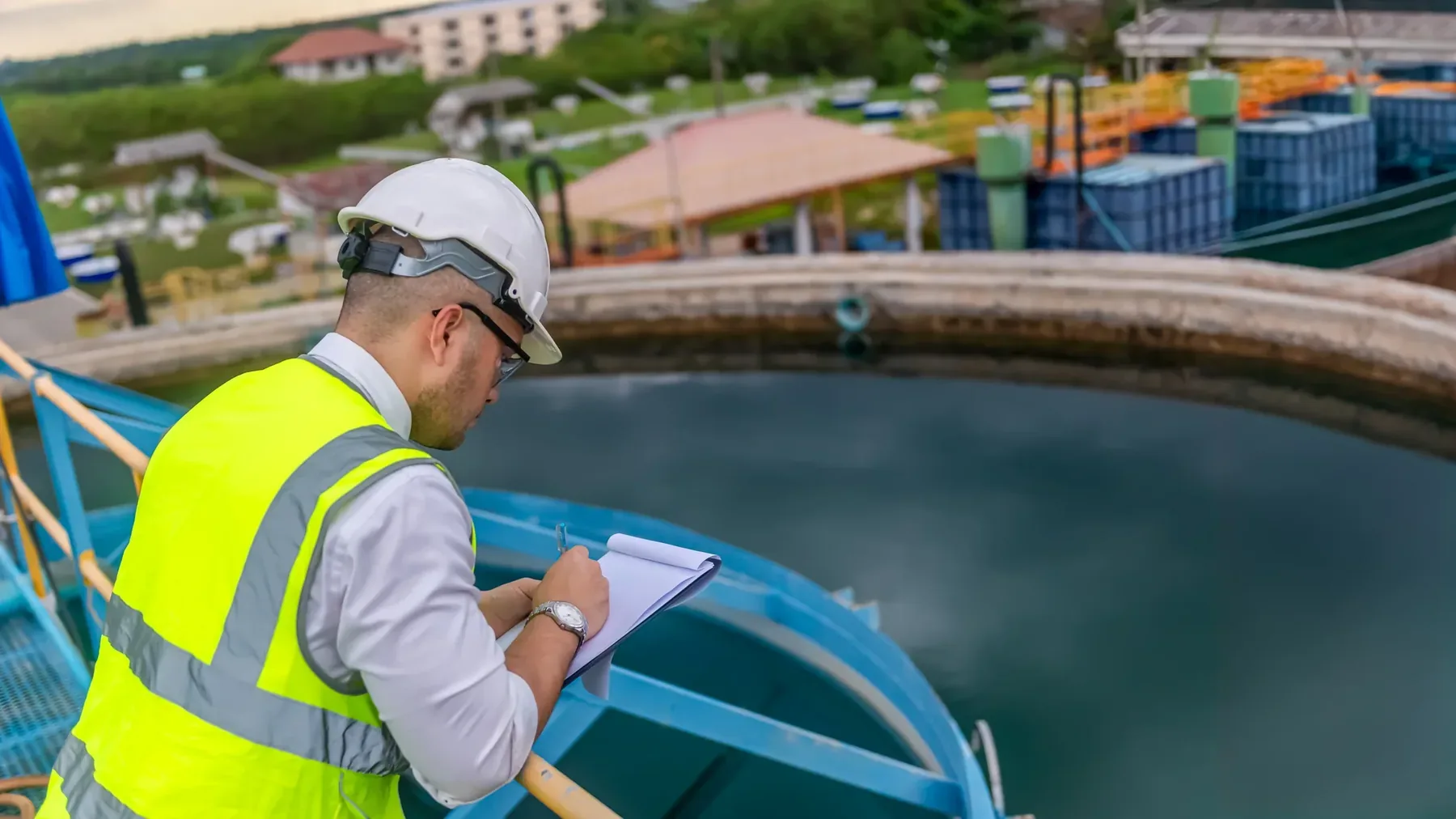
Sludge settles in tanks that were never designed to store it. A balance tank, process vessel or water tank can lose most of its working volume to a compacted layer while the liquid above still looks normal. We can help with tank sludge removal planned around the tank, its contents and safe access.
What Settles in Different Tanks
Sludge is not one material. What accumulates depends on what the tank receives and how long it is held. Effluent balance tanks may collect biological solids, grit, fats or other settled material. Process vessels can contain residues from the process they serve, while raw-water and storage tanks can accumulate silt, mineral deposits or biofilm. The actual contents should be established from site knowledge and, where needed, sampling.
The settled layer matters more than the tank’s nominal capacity. A tank can appear full of water while usable volume is occupied by compacted solids. Before any removal method is chosen, it helps to know the depth of the sludge, whether it is pumpable, and whether the liquid above it can be decanted or must be treated as part of the waste. See types of sludge for how different sludges behave.
Non-Entry Removal Methods
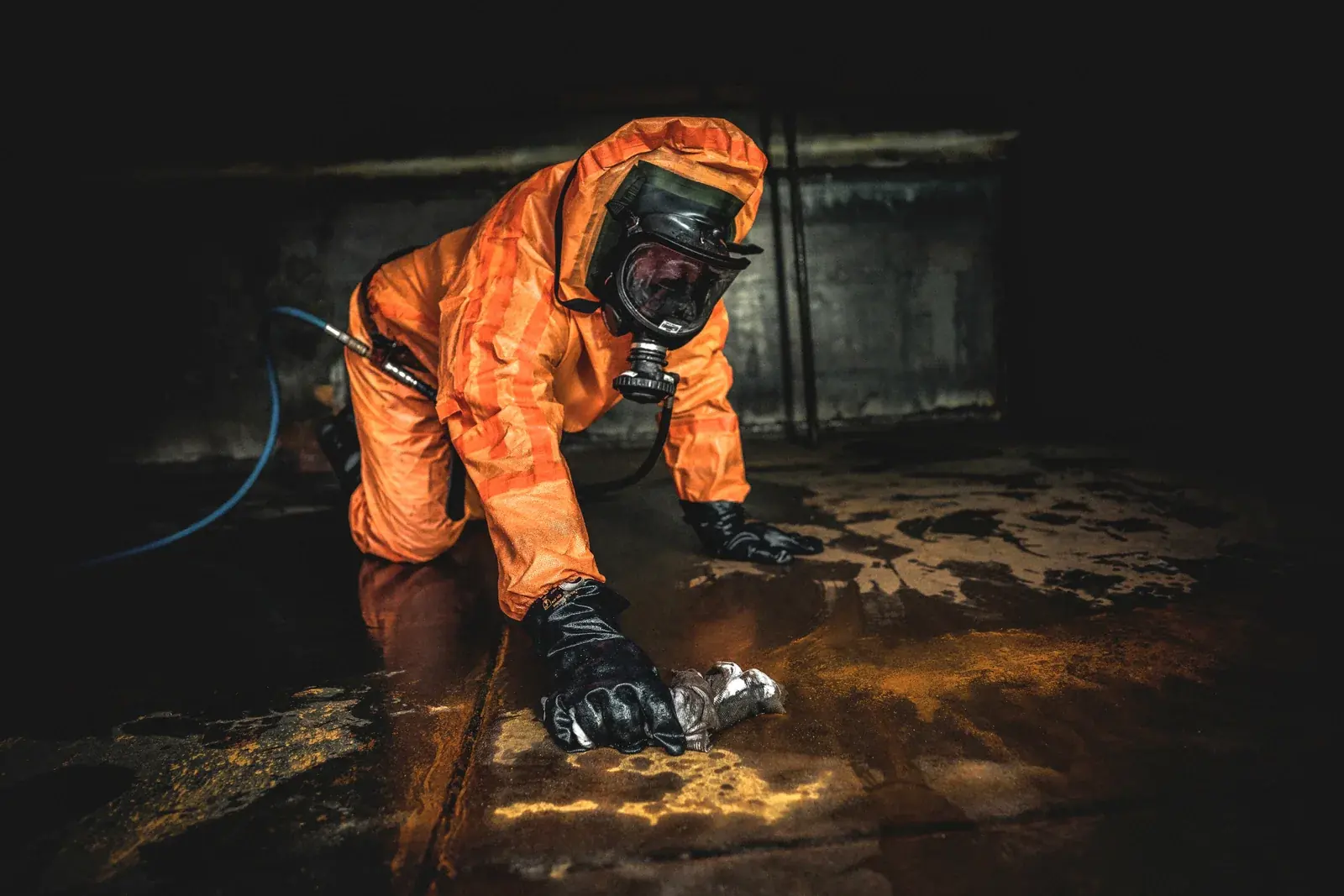
Where the tank allows it, working from outside is the safer starting point. Robotic and remote tooling, high pressure jetting and vacuum extraction can all be used without a person entering the tank. Jetting breaks up compacted material and moves it towards an extraction point; vacuum systems lift it into a tanker or transfer vessel.
Non-entry methods suit tanks with adequate openings, a workable route for hoses and a sludge that can be mobilised. They are less effective where the tank has internal baffles, narrow access or a hard, cemented layer that resists jetting. In those cases the method may need to change part way through the job.
Confined Space Entry and Permit to Work
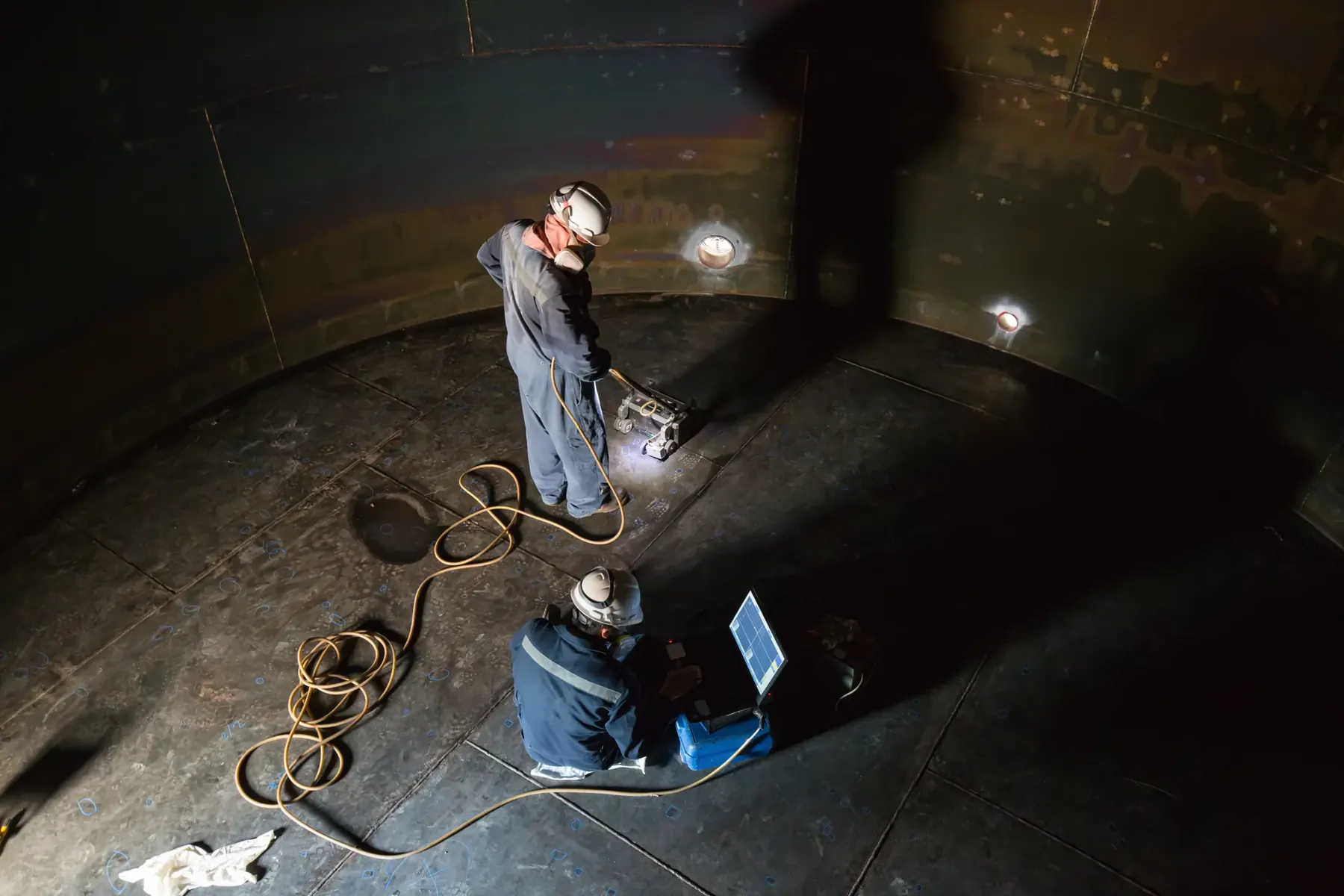
Some tanks cannot be cleared from outside. Entry is then a confined space activity and must be treated as one. The Confined Spaces Regulations 1997 require that entry is avoided where reasonably practicable, and where it cannot be avoided that a safe system of work and adequate emergency arrangements are in place. Gas testing, atmospheric monitoring, isolation of inlets and agitation equipment, and rescue provision are part of that system, not optional extras.
This is competent specialist work. The hazards in a sludge tank include oxygen deficiency, hydrogen sulphide and other toxic gases, flammable atmospheres and engulfment. We can help with tank sludge removal where entry is required, but the safe system of work is developed by those carrying out the entry, based on the specific tank. General guidance is published by the Health and Safety Executive.
Choosing Between Methods
The decision usually turns on access, sludge character and what happens to the liquid. A short table sets out the common trade-offs.
| Method | Suits | Limits |
|---|---|---|
| Vacuum extraction | Pumpable sludges, tanks with good openings | Struggles with hard or fibrous layers |
| High pressure jetting | Compacted or adhered material | Needs water management and a route for the loosened sludge |
| Robotic tooling | Tanks where entry is best avoided | Depends on access size and internal geometry |
| Confined space entry | Cases where entry cannot reasonably be avoided | Requires a full safe system of work |
Decanting the liquid layer first can reduce the volume sent for disposal, but it does not make the remaining solids non-hazardous. The decanted liquid still needs its own classification and route.
Classifying Tank Cleaning Wastes
Tank-cleaning wastes can fall under chapter 16 07 of the List of Waste, which covers wastes from transport tank, storage tank and barrel cleaning. Within that chapter, 16 07 08* covers wastes containing oil and 16 07 09* covers wastes containing other hazardous substances; the asterisk marks hazardous entries. Other tank residues may fall under a different chapter, including chapter 13 for some oil wastes. The correct code depends on the source and nature of the waste, so a tank-cleaning description alone is not enough.
Waste classification technical guidance (WM3) sets out how to assess and classify waste, including the use of the List of Waste codes. You can read it on GOV.UK. A candidate code from a name is a starting point, not a conclusion. The sludge EWC code checker can suggest candidate codes, possible contaminants and treatment options, but it is not a regulatory certification.
Documentation and Duty of Care
Once the waste leaves site, the duty of care applies to everyone who produces, carries, keeps, treats or disposes of it. In England and Wales the duty of care code of practice explains what that involves, and it is published on GOV.UK. Scotland and Northern Ireland have their own codes of practice, so the paperwork differs depending on where the tank is.
Consignment notes, transfer notes and sampling records support traceability. They help show what was done with the waste and where it went. They do not by themselves prove legal compliance, and they are not a substitute for correct classification.
Planning the Work
A useful plan starts with the tank, not the tanker. What is the tank used for, what has gone into it, and how long since it was last cleared? Is there a safe route for hoses and a place to put extracted material? Can the tank be taken out of service, and for how long? If the sludge is likely to be hazardous, sampling before removal avoids surprises on the day.
We can help with tank sludge removal for effluent balance tanks, process vessels, water tanks and storage tanks. Related work includes desludging, sludge dewatering and sludge disposal once the material is out of the tank. For general tank cleaning rather than sludge, a different scope may apply.
Free online tool
Sludge EWC Code Checker
Look up sludge sources, possible contaminants and waste-code candidates.
Common questions
Frequently asked questions
Can a tank be desludged without anyone going inside?
Often yes. Vacuum extraction, high pressure jetting and robotic tooling can clear many tanks from outside. It depends on the access openings, the internal layout and whether the sludge can be mobilised. Where baffles or a hard layer prevent it, entry may be needed and would be treated as confined space work.
Does decanting the water make the sludge non-hazardous?
No. Removing the liquid layer reduces the volume to be handled, but the remaining solids still need their own classification. The decanted liquid also needs a classification and a disposal route. Dewatering changes the physical form, not the hazardous properties.
Which EWC code applies to tank cleaning sludge?
Chapter 16 07 covers specified wastes from transport tank, storage tank and barrel cleaning. Code 16 07 08* is the hazardous entry for wastes containing oil, while 16 07 09* covers wastes containing other hazardous substances. Other residues may fall under a different chapter, including chapter 13 for some oil wastes. The correct code depends on the source and nature of the waste.
Do the rules differ across the UK?
Yes. England and Wales share the duty of care code of practice, while Scotland and Northern Ireland have their own codes. Hazardous waste requirements also differ. The nation where the tank is located determines which paperwork and rules apply.
Request a quote
Complete the form and we will get back to you.