Industrial tanks accumulate sludge at different rates because of variations in incoming solids, liquid residence time, flow patterns and how effectively settled material is removed. Two tanks handling similar wastewater can develop very different deposits if one has areas of slow circulation or receives heavier particles.
The important distinction is between solids still suspended in the liquid and material already deposited on the tank floor. Both affect operation, but they do not necessarily require the same response.
How suspended solids become tank sludge
Wastewater and process liquids often carry fine particles, grit, biological material or manufacturing residues. While the liquid is moving, some particles remain suspended. When flow slows sufficiently, particles with an adequate settling velocity begin to fall through the liquid.
Heavier particles may settle quickly, while finer material can remain suspended for much longer. Organic matter and fine particles may also combine into larger aggregates, changing how readily they settle.
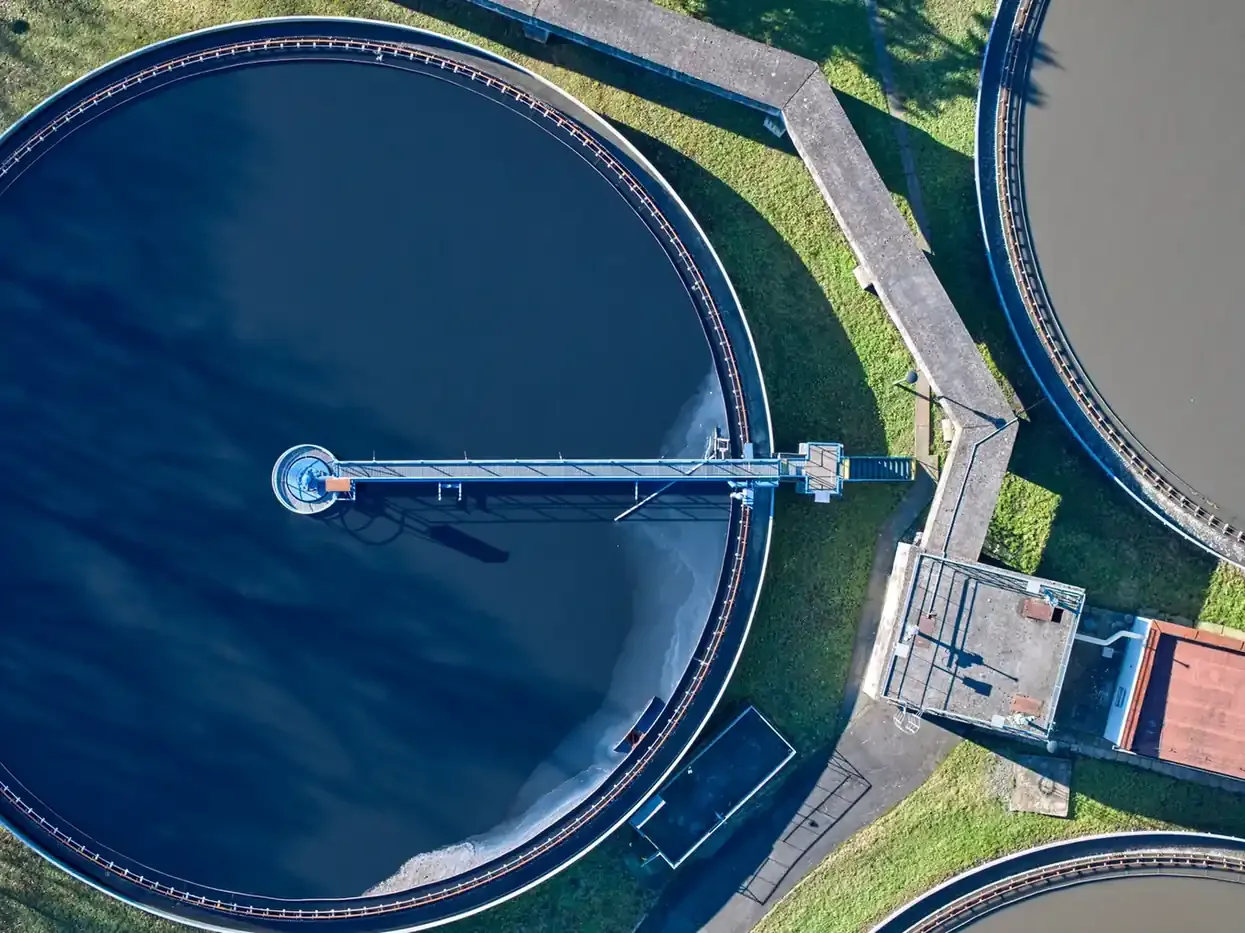
This is the principle behind settlement tanks used in wastewater treatment. Government guidance describing sewage treatment works explains how suspended solids settle and are subsequently removed from primary settlement tanks.
In an industrial storage or process tank without continuous sludge withdrawal, the same physical behaviour can gradually produce a substantial deposit.
Why some tanks collect deposits much faster
Accumulation depends on more than the total quantity of liquid passing through a vessel. Several operating conditions influence how much material remains behind:
- Solids loading: A tank receiving more suspended solids generally has more material available to settle.
- Residence time: Longer periods of relatively calm storage can allow additional particles to reach the bottom.
- Inlet position: Incoming liquid may create strong local currents while leaving other areas relatively undisturbed.
- Internal geometry: Corners, baffles, supports and uneven floors can create sheltered deposition areas.
- Operating cycles: Intermittent filling, prolonged shutdowns and changing discharge rates alter settling and resuspension.
Dead zones and uneven sludge blankets
A dead zone is an area where liquid circulation is weak compared with the main flow path. Solids entering that area may remain there because there is insufficient movement to carry them towards an outlet.
Consequently, a tank can develop a thick sludge blanket in one location while remaining relatively clear elsewhere. A single depth measurement may seriously misrepresent the total deposit.
Equally, a sudden increase in flow may disturb accumulated material and temporarily raise suspended solids concentrations downstream without removing much of the deposit permanently.
What sludge depth does not tell you
Deposit depth is useful, but it does not establish sludge volume, consistency or composition on its own. A shallow layer of dense grit may behave differently from a deeper layer of water-rich biological material.
Useful observations include the spread of deposits, liquid depth, evidence of hardening and whether sludge is concentrated around particular internal features. Where the material is uncertain, sludge sampling can help establish its characteristics before handling arrangements are selected.
Records from successive inspections are particularly informative. They show whether material is accumulating steadily, following production changes or appearing mainly after shutdowns.
Should the tank be emptied or the process adjusted?
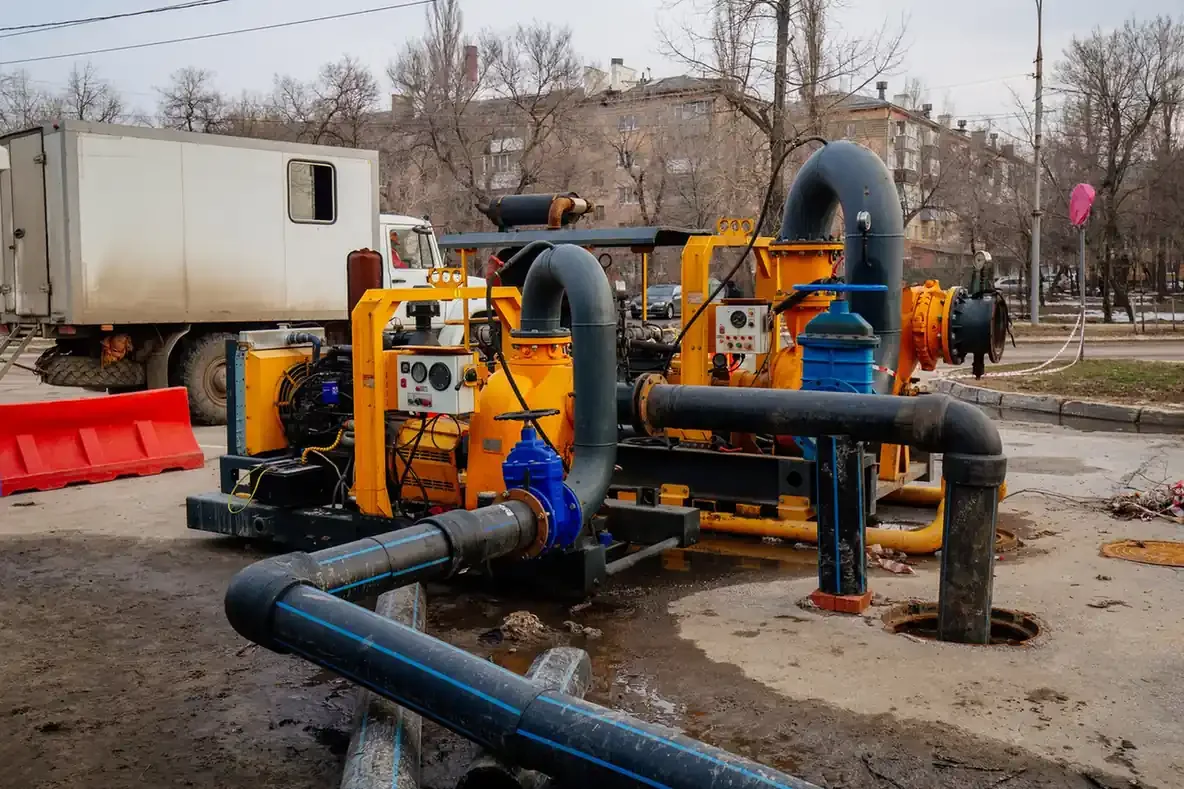
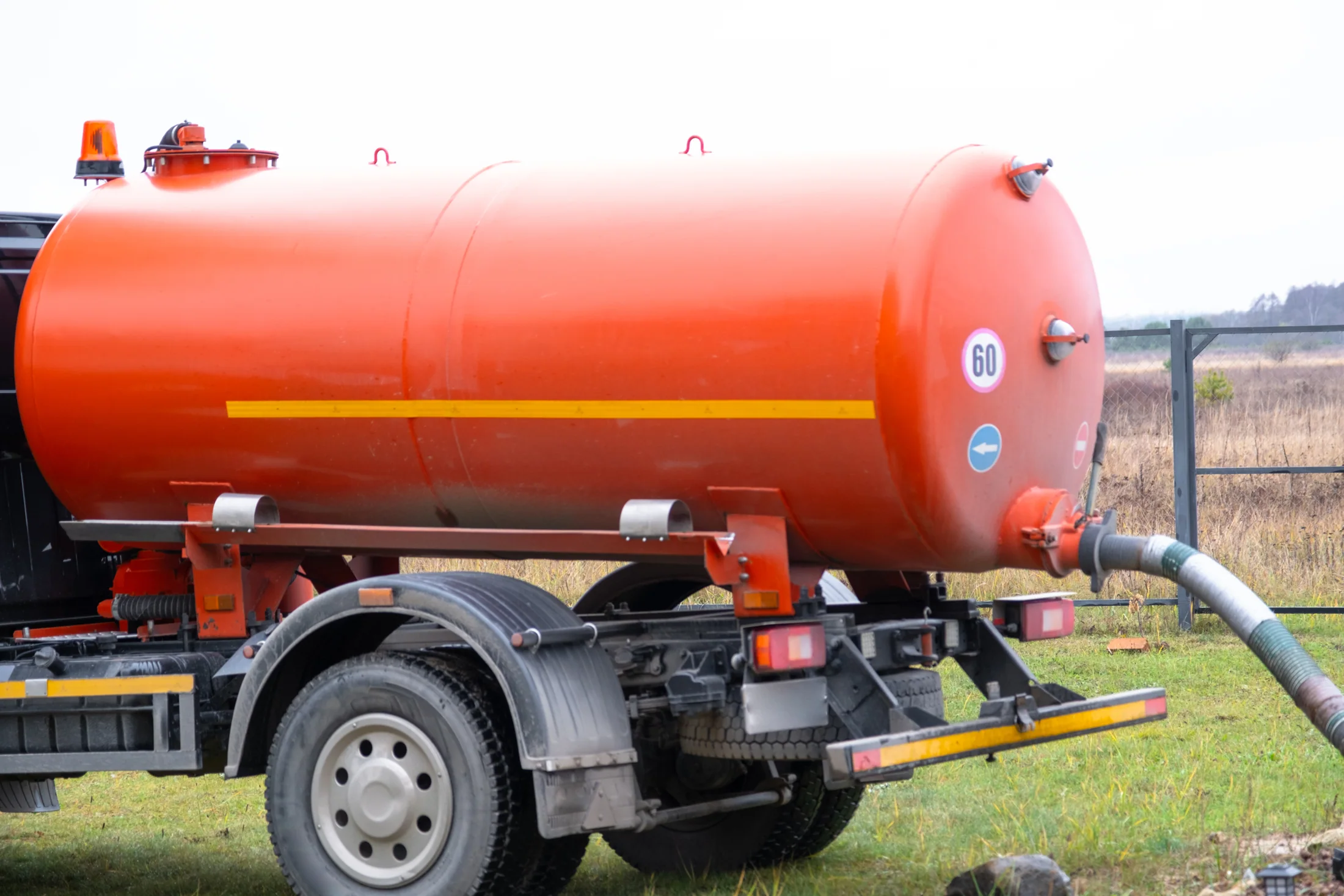
Where deposits are already reducing usable capacity, obstructing outlets or interfering with production, physical removal may be necessary. The appropriate tank sludge removal approach depends on the material, available access and whether it can be extracted without entering the vessel.
If deposits return rapidly, the underlying causes also deserve investigation. Changes to solids separation upstream, inlet arrangements or routine sludge withdrawal may reduce future accumulation.
Removal and process adjustment therefore address different problems. One restores capacity; the other aims to control the rate at which capacity is lost again.
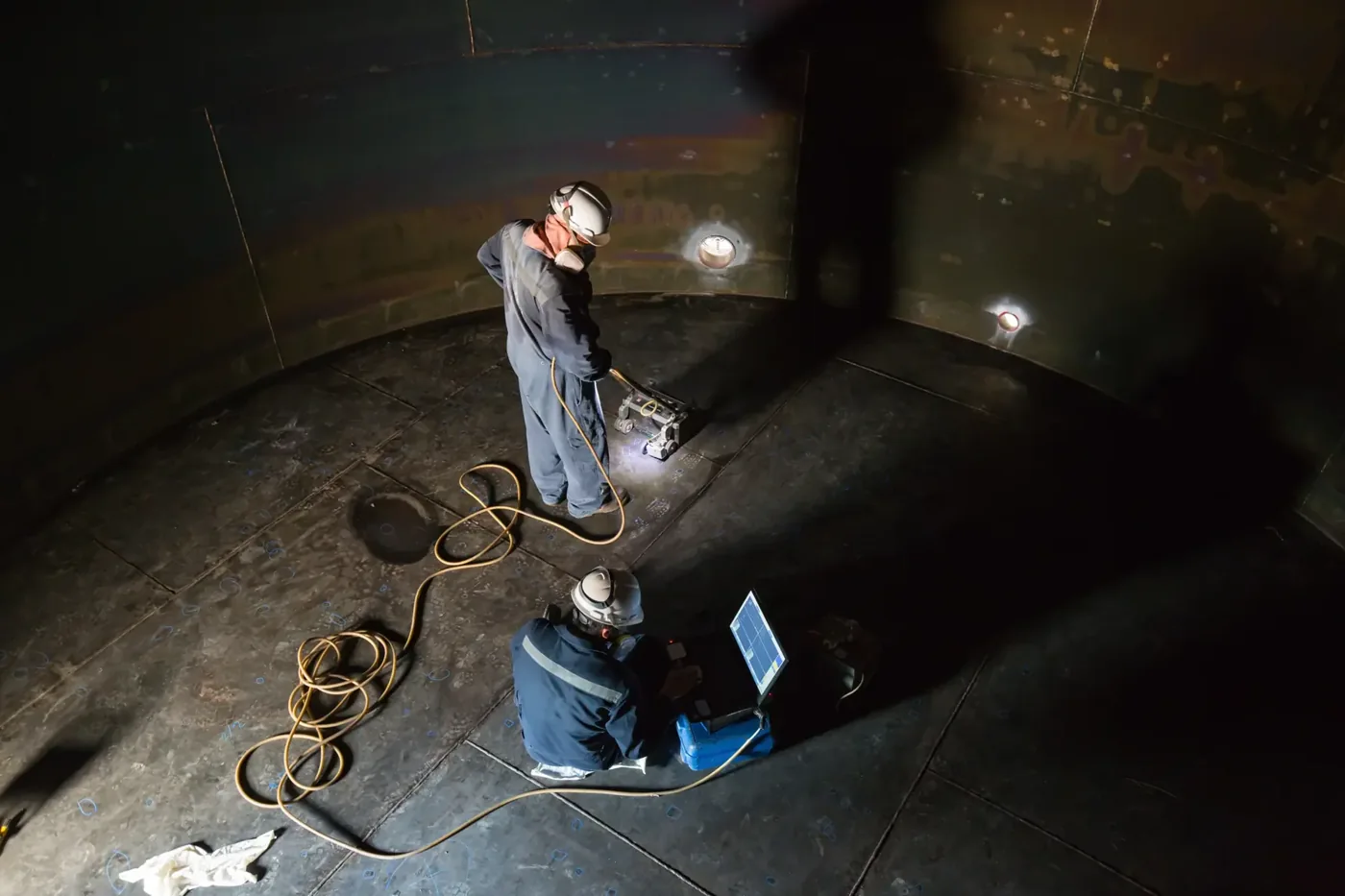
Where access involves a potentially hazardous confined space, HSE guidance for Great Britain requires avoiding entry where practicable and appropriate arrangements where entry is unavoidable. This distinction matters when assessing whether deposits can be reached externally.