A grease trap can become blocked long before reaching its full waste-storage capacity. This happens when fats, oils and grease restrict the inlet, outlet or connecting pipework, or when retained solids interfere with the passage of wastewater. The amount of material stored in the trap and the ability of water to flow through it are two different issues.
For commercial kitchens, this distinction matters because slow-draining sinks or overflowing equipment do not automatically mean the entire trap needs emptying.
A trap can have available capacity but restricted flow
Grease traps work by slowing wastewater sufficiently to allow grease and lighter fats to separate, while heavier food particles and sediment can settle.
The remaining wastewater passes towards the outlet. Over time, the trap collects a floating grease layer and a deposit of settled solids.
Problems develop when material accumulates in locations that water must pass through. A relatively small obstruction in the wrong place can disrupt flow even when much of the chamber remains available.
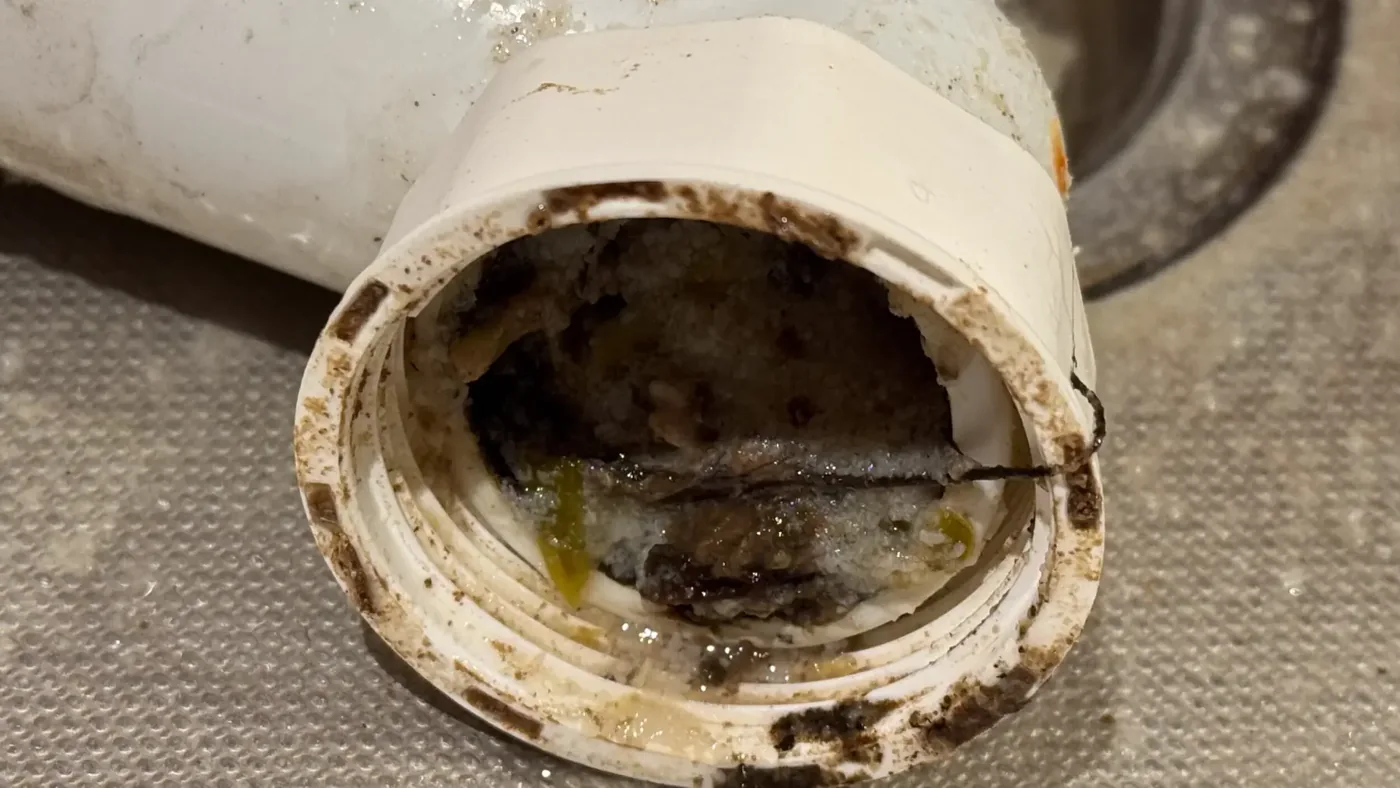
For example, fats and grease may cool and adhere to pipe surfaces. Repeated deposits can narrow the effective diameter of a connection. Food debris may then become trapped against the grease, restricting the passage further.
Similarly, a thick layer of floating grease can interfere with internal flow arrangements before the entire chamber has filled with accumulated waste.
Recognising an inlet obstruction or an outlet blockage
When the restriction is upstream
An inlet obstruction prevents wastewater from entering the separator freely. Kitchen sinks connected to the affected pipe may drain slowly, back up or develop standing water.
The trap itself may not appear unusually full because insufficient wastewater is reaching it.
Several fixtures showing similar symptoms can indicate a restriction in shared pipework, although the exact drainage layout determines where the fault lies.
When the restriction is downstream
An outlet blockage prevents wastewater from leaving the separator at its intended rate. The liquid level may rise and remain unusually high, even when the retained grease and solids occupy only part of the chamber.
This can eventually cause wastewater to back up through connected kitchen drainage.
Where the outlet or downstream pipe is restricted, removing the chamber contents alone may not restore normal drainage. The obstruction might remain in pipework beyond the trap.
Why fats and food solids cause repeated problems
FOG deposits form when fats, oils and grease cool, adhere to surfaces and accumulate. Food particles can become embedded in these deposits, producing increasingly restrictive obstructions.
Local authority guidance, including Bexley Council’s advice for food businesses, explains why grease management involves both suitable separation equipment and preventing food debris and cooking fats from entering drains.
Practical kitchen arrangements therefore affect how quickly restrictions develop. Scraping plates, separating waste cooking oil and using suitable sink strainers can reduce the amount of material reaching the equipment.
Regular maintenance remains important because separation equipment retains material rather than making it disappear.
When emptying will help and when more investigation is needed
Grease trap emptying removes accumulated waste from the separator. Where excessive retained grease or settled food solids are obstructing internal flow, this may address the immediate problem.
However, if a restriction lies inside the inlet connection, the outlet connection or further along the drainage system, the affected pipework must also be assessed.
Before deciding which work is needed, it helps to establish:
- Whether drainage is slow at one fixture or across several fixtures.
- Whether wastewater reaches the grease trap normally.
- Whether the chamber’s liquid level is unusually high.
- Whether substantial grease or sediment is obstructing internal components.
- Whether problems return shortly after previous emptying.
The GOV.UK pollution prevention guidance also identifies grease and sediment traps as measures for managing contaminated washwater from commercial food premises.
If a trap repeatedly blocks while containing relatively little retained waste, increasing the emptying frequency may not resolve the underlying restriction. The relevant question is whether wastewater can enter, pass through and leave the equipment freely.
Distinguishing restricted flow from accumulated storage waste helps identify whether the problem calls for emptying, pipework attention or a review of how grease enters the drainage system.