
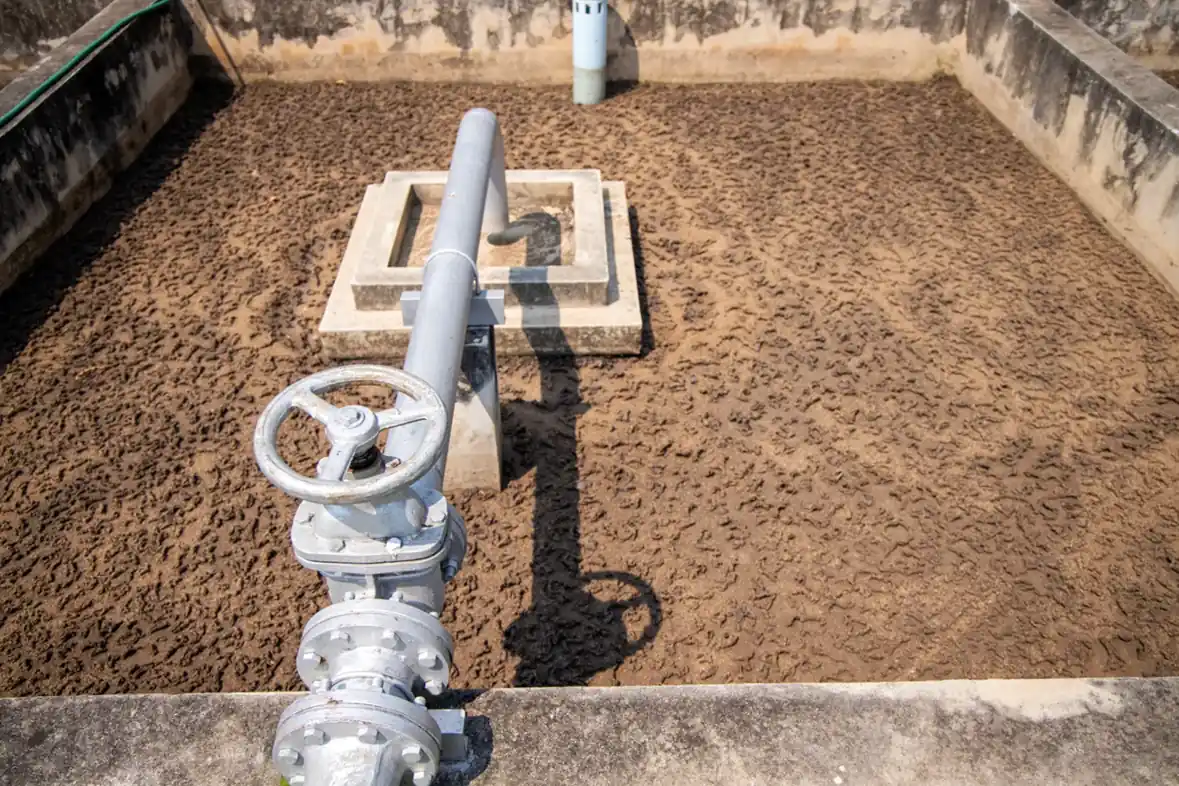
Industrial sludge removal
Hazardous Sludge Disposal
Sludge becomes hazardous waste through its origin, its chemistry or both. A metal hydroxide filter cake from plating is not the same problem as an oily tank bottom, and the disposal route follows from the classification. We can help with hazardous sludge disposal projects where the waste stream is already understood or needs sampling first.
What Makes Sludge Hazardous Waste
Sludge is a broad term. It covers the settled solids from a settlement tank, the filter cake from a filter press, the oily layer at the bottom of a fuel store and the biological mass from an effluent treatment plant. Whether any of these is hazardous waste depends on what is in it, not on what it looks like.
Waste classification should follow the applicable WM3 guidance and regulator requirements for the UK nation where the waste is produced. The guidance works from the List of Waste, sometimes called the European Waste Catalogue. Each entry has a six digit code. Some entries are absolute hazardous, meaning any waste that fits the description is hazardous regardless of concentration. Others are mirror entries, where the same description appears twice, once as hazardous and once as non hazardous, and the correct one depends on whether dangerous substances are present above the relevant threshold.
Two examples show the difference. Phosphatising sludges are covered by the absolute hazardous entry 11 01 08*. Other sludges and filter cakes from chemical surface treatment of metals may fall under the paired entries 11 01 09* and 11 01 10, depending on whether hazardous substances are present. Industrial wastewater treatment sludges can also have hazardous and non-hazardous paired entries. The process and composition therefore matter when the code is selected.
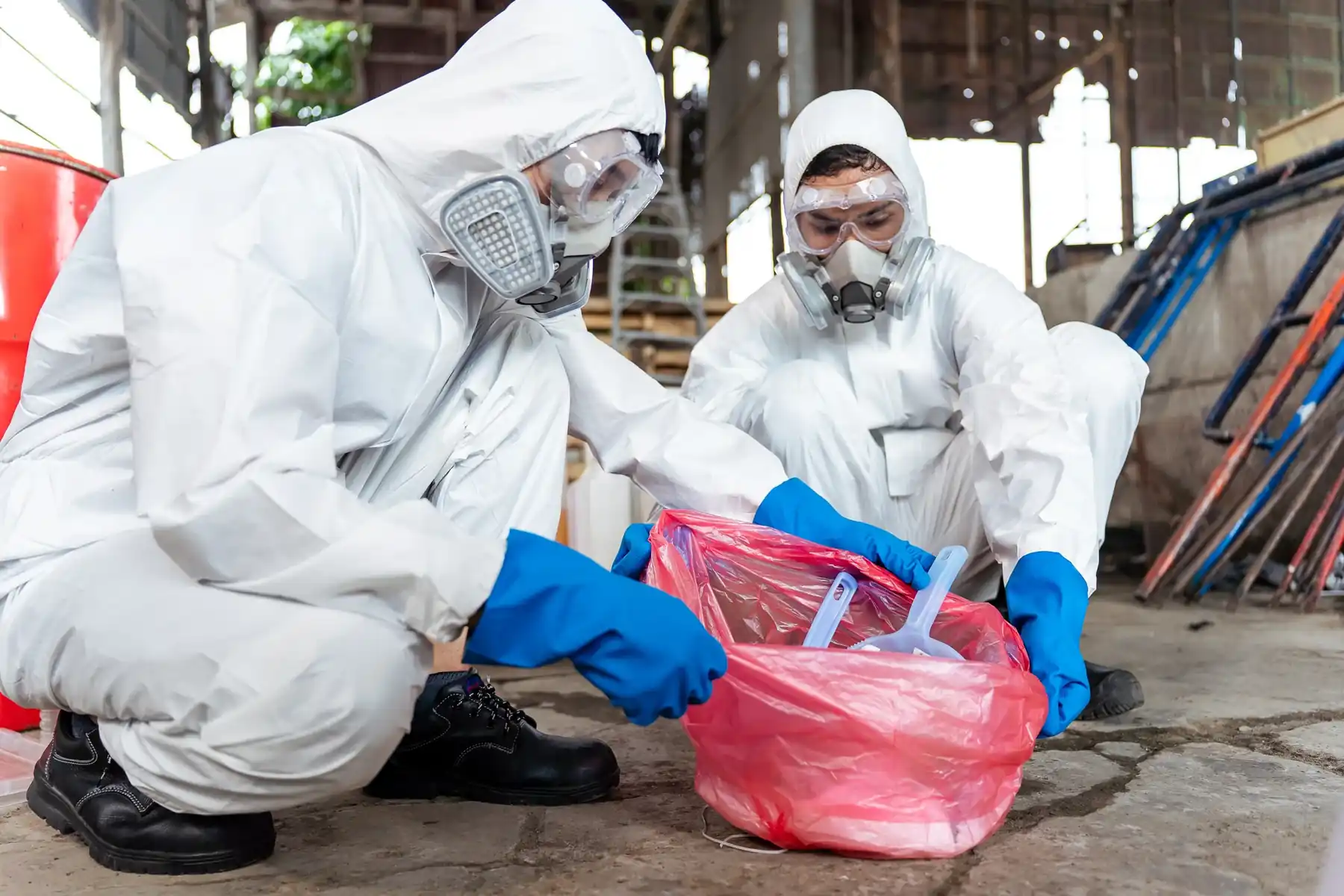
Absolute Entries and Mirror Entries
Absolute hazardous entries remove the need for a threshold assessment, but they still need a code that describes the waste accurately. Mirror entries require the producer to identify the dangerous substances present, compare their concentrations against the thresholds in WM3, and record the reasoning. That reasoning is what a regulator will ask for if the classification is questioned.
Hazard properties are expressed as HP codes. HP 4 covers irritant effects, HP 8 covers corrosive properties, HP 14 covers ecotoxicity. A sludge can carry more than one. The codes are not a score or a ranking. They describe the properties that made the waste hazardous in the first place, and they influence which treatment or disposal routes will accept it.
Where the chemistry is unclear, sampling and laboratory analysis give the assessment a factual base. Sampling a lagoon or a tank is not a single dip with a bottle. Stratification, settled layers and the liquid above them all affect what a sample represents. A sampling plan that states where samples were taken, at what depth and how they were preserved is more useful than a single result with no context. More detail on this sits in our page on sludge sampling.
Sludge From Effluent Treatment and Industry
Effluent treatment plant sludge, often shortened to ETP sludge, is where classification questions cluster. The List of Waste groups many of these wastes by industrial chapter rather than by treatment process.
- Chapter 06 covers wastes from inorganic chemical processes. The correct subchapter depends on the process that generated the waste.
- Chapter 07 covers organic chemical processes, including distillation residues and spent filter materials.
- Chapter 11 covers metal treatment and coating, including plating sludges and pickling residues.
- Chapter 19 covers wastes from waste management facilities, water treatment and the treatment of industrial effluent, including 19 08 13* for sludges containing dangerous substances from other treatment of industrial wastewater.
The chapter matters because it points to the process that produced the sludge, and the process often explains which contaminants are plausible. A food factory and a printed circuit board plant can both run an effluent plant, and their sludges will not classify the same way. Our sludge contaminants page covers the common groups, including metals, oils, solvents and surfactants.
Treatment and Disposal Routes
Once the classification is settled, the route depends on the physical form of the sludge, the contaminants present and what the receiving facility is permitted to accept.
Physico-chemical treatment
This route adjusts the chemistry of the sludge so that contaminants separate or stabilise. It is common for metal bearing sludges, where pH adjustment causes dissolved metals to precipitate as hydroxides that can be filtered out. The resulting filter cake still needs a disposal route of its own.
Solidification and stabilisation
Liquid sludges can be mixed with binding agents to produce a solid mass with better handling properties and reduced mobility of contaminants. This is often used before landfill, and the treated material still has to meet the waste acceptance criteria for the site.
Incineration
Incineration may be an option for some wastes with suitable characteristics where an authorised facility can accept them. The resulting residues are separate waste streams that need their own classification and management route.
Hazardous landfill
Hazardous landfill accepts waste that meets the waste acceptance criteria for that site. WAC testing is a separate exercise from classification. Passing WAC does not make a waste non hazardous, and it does not replace the WM3 assessment. The two answer different questions.
Dewatering may be considered before treatment or disposal where reducing the water content makes the waste more practical to handle or transport. Whether it is suitable depends on the sludge and the intended receiving route. Our sludge dewatering page covers the methods and the limits of each.
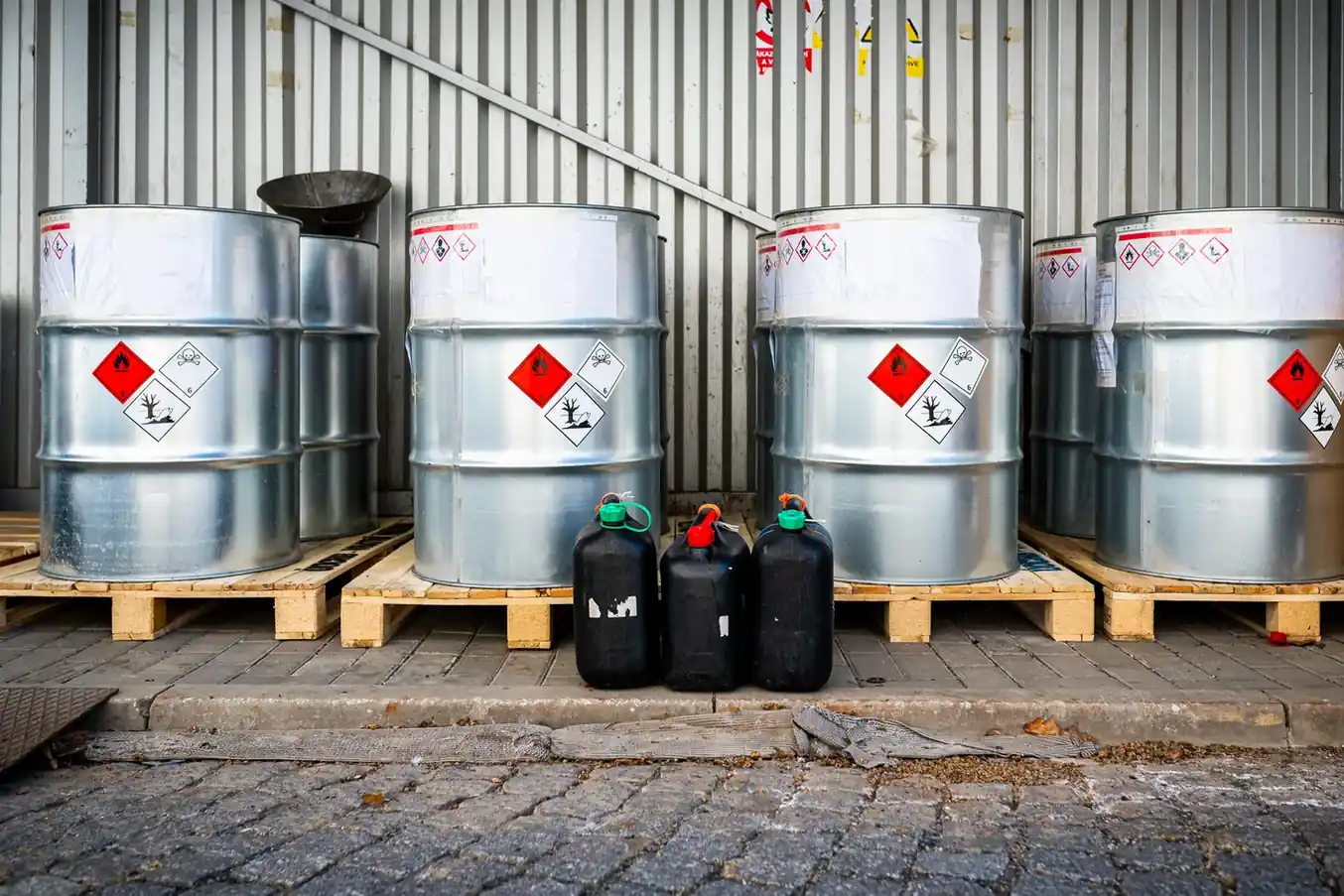
Consignment Notes and Producer Registration
Hazardous waste movements in England and Wales use a consignment note. The note records information about the waste and the parties involved in the movement. In Wales, hazardous waste producer registration can also apply, with exemptions for some premises, so the current Natural Resources Wales requirements should be checked before a movement is arranged. Scotland uses its special waste consignment system, and Northern Ireland has its own hazardous waste arrangements.
Hazardous waste should not be mixed or diluted simply to avoid the controls that apply to it. Mixing is tightly controlled and may only be carried out where the applicable legal and permit requirements are met. Keeping waste streams separate also makes classification and route selection clearer.
The duty of care applies to everyone who produces, carries, keeps, treats or disposes of controlled waste. It is set out in the Environmental Protection Act 1990 and explained in the waste duty of care code of practice. Failure to comply is an offence, and the code can be used as evidence in proceedings.
Safety and Access
Hazardous sludge may be held in tanks, pits or sumps where access and atmosphere need careful assessment. Where a work area meets the definition of a confined space, the Confined Spaces Regulations 1997 require entry to be avoided where reasonably practicable and a safe system of work and suitable emergency arrangements where entry is necessary.
This is competent specialist work. It is not a task for general labour or for anyone without the right equipment, training and rescue arrangements. The same applies to the sampling that supports classification, because a sample taken from the wrong place or in the wrong conditions can mislead the whole assessment.
Practical Decisions Before Disposal
The sequence that works is straightforward. Establish what the sludge is and where it came from. Sample if the chemistry is not already documented. Classify it against WM3 and record the reasoning. Choose a route that accepts that classification and that physical form. Confirm the receiving facility will take it before anything is moved. Prepare the required consignment paperwork and check any additional requirements with the relevant regulator.
Costs follow from those decisions rather than from a published rate. Volume, water content, contaminant type, treatment route, transport distance and the receiving facility’s charges all move the figure. A real quote needs the classification and the site details first. Our sludge removal cost page explains the drivers without inventing numbers.
We can help with hazardous sludge disposal projects, including arranging sampling to support classification, dewatering where appropriate and removal to a suitable authorised treatment or disposal facility.
Free online tool
Sludge EWC Code Checker
Look up sludge sources, possible contaminants and waste-code candidates.
Common questions
Frequently asked questions
Is sludge always hazardous waste?
No. Some sludges are absolute hazardous entries, some are mirror entries that depend on the dangerous substances present and their concentrations, and some are non hazardous. The classification has to be assessed against WM3 using the origin of the waste and, where needed, analytical results. A description alone does not settle it.
Does dewatering make hazardous sludge non hazardous?
No. Removing water reduces volume and changes handling, but it does not remove the contaminants that made the sludge hazardous. The classification stays with the waste, and the separated liquid also needs its own assessment and route.
Does passing WAC testing mean the waste is not hazardous?
No. Waste acceptance criteria testing shows whether a specific landfill can accept the waste. It is separate from the WM3 classification. A waste can pass WAC for a hazardous landfill and remain hazardous waste.
Can hazardous sludge be mixed with other waste to dilute it?
Not simply to avoid hazardous-waste controls. Mixing and dilution are tightly controlled and may only be carried out where the applicable legal and permit requirements are met. The waste should be classified and managed on the basis of its actual composition and treatment route.
Do the rules differ across the UK?
Yes. England and Wales use hazardous waste consignment notes, and producer registration can also apply in Wales subject to the relevant exemptions. Scotland uses special waste consignment arrangements, and Northern Ireland has its own system. The applicable regulator's current requirements should be checked for the site and movement.
Request a quote
Complete the form and we will get back to you.