
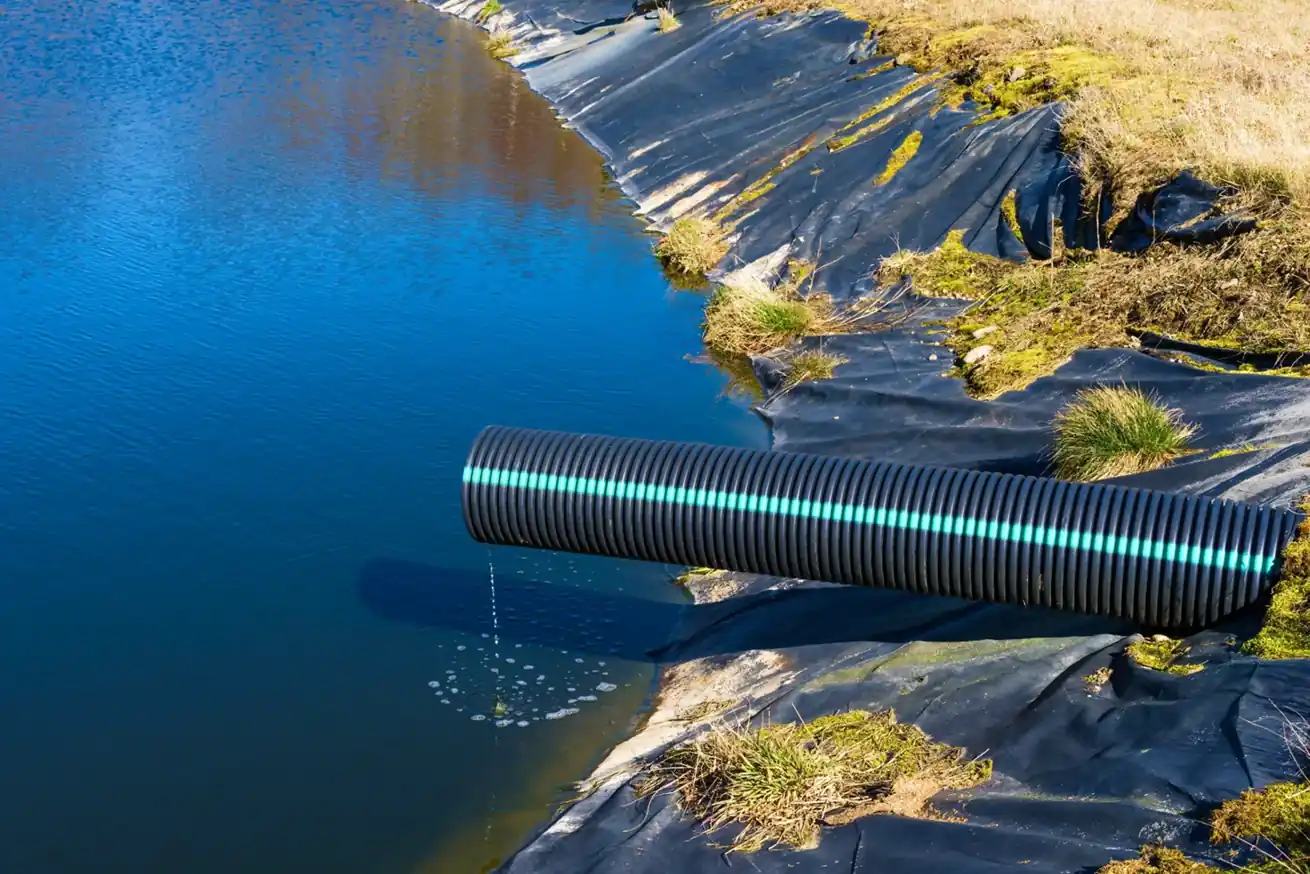
Industrial sludge removal
Pond Dredging
A pond can hold plenty of water and still be too shallow to work. Silt builds up quietly until fish, plants and outlets suffer. We can help with pond dredging and silt removal projects, from method choice through to sampling and the destination for the dredged material.
What Pond Dredging Involves
Dredging a pond means removing accumulated sediment from the bed to restore depth, volume and flow. The material is usually soft organic silt, but it can also contain grit, leaf litter, roots, clay and, in some waters, contamination from road runoff or historic land use. The depth of the silt layer, not the water depth, drives the method. A pond that looks healthy at the surface may have lost most of its usable volume below.
Before any plant arrives, it helps to know the bed profile, the silt thickness across the pond, access for machinery, and what happens to water levels during the work. A bathymetric survey or a series of probe readings gives a clearer picture than a single spot check. We can help with pond silt removal projects where the scope is agreed in advance rather than discovered on the day.
Choosing a Dredging Method
There is no single method that suits every water body. The choice depends on size, depth, access, the sensitivity of the pond and how the silt will be handled afterwards.
- Long-reach excavator: works from the bank where ground conditions allow. Suited to smaller ponds and margins, but reach limits how far into the centre it can work.
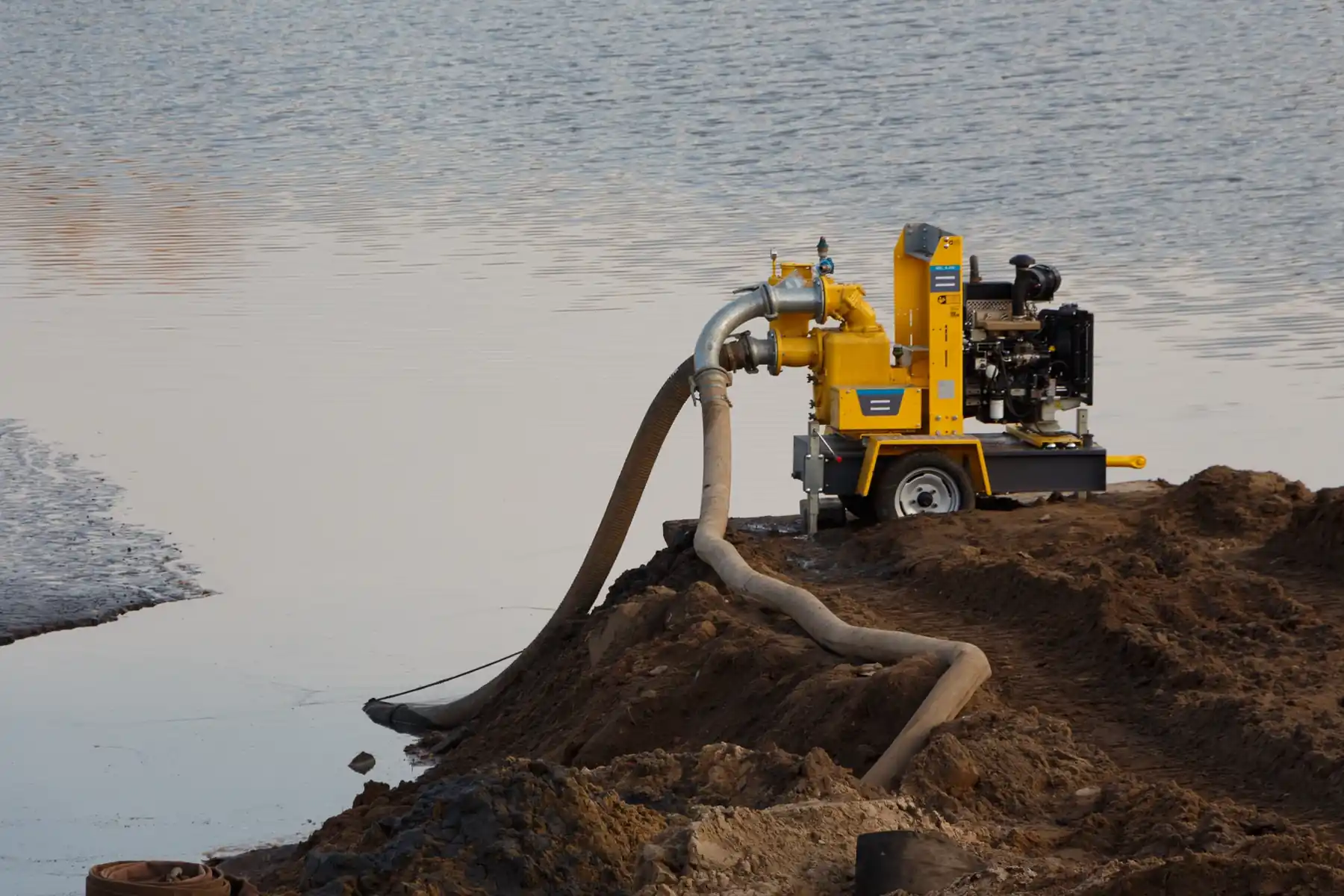
- Suction dredger: removes silt as a slurry, often with less disturbance to banks. Needs a discharge point and a plan for the water that comes with the silt.
- Silt pumping: moves dredged material to a treatment or storage area, commonly into geobags or a lagoon, where solids settle and water separates.
Each method has limits. Excavators cannot reach everywhere and can damage banks if the ground is soft. Suction dredging produces large volumes of water that must be managed. Pumping depends on a suitable route and a place for the silt to dewater. We can help with matching the method to the pond rather than forcing the pond to suit the method.
Fish, Wildlife and Timing
Ponds are working habitats as well as water bodies. Timing affects both the ecology and the practical result. Nesting birds, spawning fish and amphibian activity all constrain when work can reasonably take place. In many cases the window is narrow, and a plan that ignores it creates avoidable problems.
Where fish are present, a fish rescue or relocation may be needed before silt is disturbed. This is specialist work, and the approach depends on species, numbers and the receiving water. Oxygen levels can fall quickly when silt is stirred, particularly in warm weather, so monitoring during and after the work matters. We can help with dredging programmes that account for these constraints instead of treating them as an afterthought.
Sampling and Waste Classification
Dredged silt is waste, and its classification affects where it can go. The mirror entry pair 17 05 05* (dredging spoil containing hazardous substances) and 17 05 06 (dredging spoil other than those mentioned in 17 05 05) is a common starting point, but the correct code depends on what the silt actually contains. A name alone does not tell you whether material is hazardous.
Sampling and analysis may be needed before a destination is confirmed, depending on the source of the silt, site history and the requirements of the receiving route. Relevant parameters can include metals, hydrocarbons, pesticides and nutrients. The sampling plan should reflect the material and the decision it needs to support. We can help arrange sampling and review the results alongside the proposed removal and disposal route. See sludge waste classification and sludge sampling for more detail.

Where Dredged Silt Can Go
The destination for dredged material is often the part of a project that decides whether it goes ahead. Common routes include:
- Deposit near the dredging location where a relevant exemption or authorisation applies and all of its conditions are met. In England, the D1 exemption can apply to certain non-hazardous dredging spoil from inland waters.
- Recovery on land where the material is suitable and the relevant permit, exemption or other authorisation allows the proposed use.
- Disposal or treatment at an appropriately authorised facility where recovery is not suitable.
Dewatering can reduce the quantity of material requiring transport, but dewatering alone does not establish a different waste classification. The classification and receiving route still need to reflect the material after treatment. Waste documentation supports traceability; it does not by itself prove legal compliance. We can help with planning the silt destination alongside the dredging method, because the two decisions are linked. Related pages include sludge dewatering and sludge disposal.
Ponds, Lakes, Canals and SuDS
Different water bodies bring different priorities. Estate lakes and fishing lakes usually focus on depth, water quality and fish health. Golf course ponds often need to look right as well as function. SuDS and balancing ponds must retain their storage volume and outlet performance, so silt removal is tied to flood risk as much as amenity.
Mill ponds and canals add structures, walls and heritage constraints. Silt removal near a listed wall or a sluice needs care, and access may be limited. The outlet or control structure also needs checking where it affects the reason for the silt build-up or the performance of the water body. We can help with silt removal from ponds, lakes and canals where the scope reflects the specific water body. See silt removal for related work.
Small Garden Ponds
Domestic garden ponds are a different scale of work. Where a pond is small and the silt is limited, manual removal or a pond vacuum may be enough, and specialist contractors are rarely economic. If a garden pond has a liner, a large silt load or protected wildlife, it is worth taking advice before disturbing it.
Practical Decisions Before Work Starts
Most problems on dredging projects trace back to decisions made too late. Useful questions include:
- How thick is the silt, and how is that known?
- What is the target depth or volume after dredging?
- Where will the silt go, and has that route been confirmed?
- What sampling is needed, and when will results be available?
- Are there fish, protected species or nesting constraints?
- How will water levels be managed during the work?
- What access is available for plant and transport?
Answering these early reduces the risk of a stalled project. We can help with pond dredging and silt removal where the method, the sampling and the silt destination are considered together.
Free online tool
Sludge EWC Code Checker
Look up sludge sources, possible contaminants and waste-code candidates.
Common questions
Frequently asked questions
How do I know how much silt is in my pond?
A bathymetric survey or a series of depth probes across the pond gives a much better picture than a single reading. The silt thickness varies across a pond, and the method and cost depend on the volume and distribution, not just the maximum depth.
Can dredged silt be spread on land?
Sometimes. Recovery on land may be possible where the dredging spoil is suitable and the relevant permit, exemption or other authorisation allows the proposed use. The waste code alone does not make landspreading permissible. Site conditions, analysis where required and the rules for the relevant UK nation must all be checked.
Does dewatering make dredged silt non-hazardous?
No. Dewatering reduces water content and can reduce the quantity requiring transport, but dewatering alone does not establish a different waste classification. The material still needs to be assessed and managed under the appropriate classification and receiving route.
When is the best time to dredge a pond?
It depends on the wildlife present. Nesting birds, spawning fish and amphibian activity all constrain the window. In many ponds the work has to fit around these periods, and a fish rescue may be needed before silt is disturbed.
Do I need permission to dredge a pond?
It depends on the water body and the location. Ponds connected to a watercourse, canals, and some SuDS features may need agreement from the relevant authority. Requirements differ across England, Wales, Scotland and Northern Ireland, so they should be confirmed before work is specified.
Request a quote
Complete the form and we will get back to you.